Cost of Concrete Services in Jacksonville, FL
What Do Concrete Services Cost in Jacksonville, FL?
If you are planning a concrete driveway, patio, slab, stamped or decorative surface, repair, resurfacing, or maintenance project in Jacksonville, one of the first questions is usually cost. Jacksonville FL Concrete helps route project requests to local concrete professionals who may review the property, intended use, existing surfaces, access, drainage, finish goals, and project scope before discussing project-specific pricing.
While every property and project is different, typical planning ranges can help establish a realistic budget and show why apparently similar concrete projects may receive different estimates. Pricing can be influenced by square footage, demolition, concrete thickness, reinforcement where appropriate, finish selection, layout complexity, site preparation, access, drainage, existing conditions, and local requirements.
Across Jacksonville and nearby Northeast Florida communities, coastal exposure, rainfall and drainage, sandy or variable site conditions, established landscaping, right-of-way connections, HOA procedures, and jurisdiction-specific requirements can also affect the amount of preparation, coordination, and work involved.
Request an Estimate
Have photos, drawings, or project notes? You can attach them through the form or send additional details to
Thank you for contacting us.
We will get back to you as soon as possible.
Please try again later.
Typical Price Ranges for Concrete Services in Jacksonville
Exact pricing requires project-specific review, but the following ranges can provide a starting point for budgeting. They should be treated as planning estimates rather than fixed rates because demolition, access, drainage, preparation, thickness, reinforcement, finish complexity, permitting, and other property-specific requirements can move a project outside the typical range.
Price Range
| Project Type | Typical Jacksonville Planning Range | Common Scope |
|---|---|---|
| Concrete Driveways | $6–$14 per sq. ft | New standard driveway installation, driveway replacement, extensions, apron-related planning, and basic finish options before major drainage, removal, or decorative upgrades |
| Concrete Patios | $6–$13 per sq. ft. | Standard patio installation with basic site preparation, grading, forming, and finishing for outdoor living areas |
| Concrete Slabs | $6–$12 per sq. ft. | Slabs for sheds, garages, additions, workshops, equipment pads, and outdoor-use areas |
| Stamped Concrete | $10–$22 per sq. ft. | Patterned and colored patios, walkways, driveways, pool-adjacent areas, and outdoor living surfaces |
| Decorative Concrete | $8–$20 per sq. ft | Color, scoring, borders, exposed aggregate, stains, custom textures, and other decorative finish upgrades |
| Concrete Repair | $500–$7,500+ | Localized crack repair, patching, joint work, resurfacing, selective replacement, and surface restoration |
| Concrete Maintenance | $1.50–$4.00 per sq. ft. | Cleaning, sealing, joint care, surface protection, and maintenance work; minimum project charges may apply |
| Concrete Walkways | $6–$13 per sq. ft. | New walkway installation, replacement, entry paths, side-yard connections, grading, forming, and standard finish options before decorative upgrades |
Pricing is provided for planning only. Site conditions, drainage, access, removal needs, finish selections, and final scope determine the written estimate.
If you are still deciding which driveway material makes sense for the property, Concrete Driveway vs. Asphalt compares installation, initial project scope, surface heat, drainage, maintenance, repairs, appearance, and long-term ownership considerations.
What Drives Concrete Project Cost in Jacksonville?
Two projects with similar square footage can have different estimates because the visible surface is only one part of the scope. Preparation, access, intended use, existing conditions, drainage, finish selection, and local requirements can all affect the amount of labor, materials, equipment, and coordination involved.
Project Size & Square Footage
Larger projects generally require more concrete, forming, preparation, finishing time, equipment use, and labor. Smaller jobs can also have a relatively high cost per square foot because delivery, mobilization, setup, and minimum project costs are spread across less surface area.
Layout, Access & Design Complexity
Straight rectangular areas with open equipment access are generally simpler to complete than projects involving curves, narrow side yards, gates, multiple elevations, connected surfaces, detailed borders, difficult material access, or extensive work around landscaping and structures.
Demolition, Site Preparation & Drainage
Existing-concrete removal, haul-off, excavation, grading, compaction, base preparation, root or irrigation conflicts, drainage corrections, and transitions to surrounding surfaces can all add to project scope. These factors can be especially important on replacement driveways, established properties, low-lying areas, and projects where water already collects around existing hardscape.
Permits, HOA & Jurisdictional Requirements
Some projects may involve permits, inspections, HOA or architectural review, drainage requirements, engineering, driveway connections, or work within a public right-of-way. Which requirements apply depends on the property and project scope and should be confirmed before they are included in a final budget.
Concrete Upgrades That Can Increase Project Cost
Many homeowners choose to enhance a concrete project with additional features such as:
- Stamped patterns or custom textures
- Integral color, stains, scoring, or decorative borders
- Driveway widening or added parking area
- Increased thickness or reinforcement where required by the intended use
- Demolition and replacement of existing concrete
- Additional grading or drainage work
- Complex curves, transitions, or connected surfaces
- Protective sealing for compatible stamped or decorative finishes
These features can increase the initial project cost because they may require additional material, preparation, layout work, finishing time, equipment, or maintenance considerations. Whether an upgrade makes sense depends on the surface use, property layout, appearance goals, existing conditions, and available budget.
How Project Scope Changes the Budget
Concrete pricing does not increase only because a project becomes larger. Preparation, access, removal, drainage, structural requirements, layout, and finish complexity can change the scope even when two projects have similar square footage.
Straightforward Projects
A straightforward project may involve open access, a simple layout, limited demolition, standard site preparation, practical drainage, and a broom or similarly uncomplicated finish. Examples can include a small equipment pad, simple patio, walkway section, or uncomplicated driveway extension.
Moderate-Scope Projects
A moderate project may involve existing-concrete removal, more extensive grading or base preparation, driveway replacement, patio expansion, additional drainage work, added reinforcement where appropriate, or modest color and decorative details.
Complex or Custom Projects
More complex projects may involve difficult access, significant demolition, extensive drainage or grading work, larger or connected surfaces, utility or structural coordination, stamped or detailed decorative finishes, custom layouts, or several project areas completed together.
These are not fixed pricing tiers. They illustrate why project scope can matter as much as square footage when comparing concrete estimates.
Why Concrete Costs Vary Across Jacksonville & Northeast Florida
Location by itself does not determine concrete pricing, but different property settings can create different access, drainage, preparation, demolition, approval, and coordination requirements. That is why two similar-looking projects in Northeast Florida may involve different scopes.
Beach & Coastal Properties
Projects in Atlantic Beach, Jacksonville Beach, Neptune Beach, Ponte Vedra Beach, and other coastal areas may involve salt-air exposure, drainage, flood-sensitive conditions, compact lots, established landscaping, or limited access. These conditions can affect preparation, equipment access, finish selection, drainage work, and surface transitions.
Established, Historic & Compact Properties
Older Jacksonville neighborhoods and parts of St. Augustine may involve existing driveways, mature landscaping, narrow access, established hardscape, utility conflicts, street or sidewalk connections, or removal of aging concrete. Demolition and working around existing improvements can materially change the scope.
Planned, Gated & HOA Communities
Fleming Island, Ponte Vedra Beach, Orange Park-area communities, and other managed neighborhoods may involve HOA or architectural-review procedures, access rules, work-hour restrictions, or finish requirements. These factors do not automatically make a project more expensive, but they can affect coordination, scheduling, and project requirements.
Larger Lots, Slabs & Utility Areas
Larger suburban properties may involve longer equipment access, extended driveways, detached garages, sheds, workshops, equipment pads, or other slab projects. Size, intended load, utilities, grading, drainage paths, gates, fencing, and distance from normal staging areas can all influence cost.
Review Concrete Services in Atlantic Beach, Concrete Services in Fleming Island, Concrete Services in Green Cove Springs, Concrete Services in Jacksonville Beach, Concrete Services in Middleburg, Concrete Services in Neptune Beach, Concrete Services in Nocatee, Concrete Services in Oakleaf Plantation, Concrete Services in Orange Park, Concrete Services in Ponte Vedra Beach, Concrete Services in St. Augustine and Concrete Services in St. Johns, or explore all Jacksonville concrete service areas for additional property and location context.
How to Compare Concrete Estimates in Jacksonville
The lowest or highest number alone does not show whether two concrete estimates include the same work. A useful comparison should look at the scope behind the price so that preparation, materials, finish, drainage, and other project requirements are being compared on similar terms.
Project Scope, Measurements & Exclusions
Confirm the dimensions, project area, intended use, and work included in the estimate. It should also be clear whether demolition, haul-off, cleanup, connected surfaces, landscaping restoration, or other items are included or excluded.
Site Preparation, Base Work & Existing Concrete
Review how the estimate handles removal, excavation, grading, compaction, base preparation, existing-surface conditions, and transitions to adjacent concrete or other hardscape. Two proposals can look similar until differences in preparation are considered.
Thickness, Reinforcement & Finish
Where relevant to the project, compare concrete thickness, reinforcement approach, surface finish, color, pattern, texture, borders, joint planning, and sealing or protective treatments. A standard driveway and a stamped patio should not be evaluated as though the material and finishing scope were identical.
Access, Drainage & Local Requirements
Check whether difficult access, equipment staging, grading, runoff, drainage work, permits, right-of-way requirements, HOA procedures, or other known property conditions have been included or identified separately.
Pricing, Timeline & Optional Work
A useful estimate should make the core scope and price clear and identify optional upgrades or additional work separately where practical. The anticipated schedule, payment terms, and any conditions that could change the final scope should also be understood before comparing proposals.
Comparing equivalent scope is more useful than assuming that the cheapest proposal is automatically the best value or that the highest-priced proposal necessarily includes better work.
Request a Concrete Cost Estimate in Jacksonville
Project-specific pricing becomes more useful when the request includes enough information to understand the likely scope. Surface type, approximate dimensions, intended use, existing concrete, demolition or preparation needs, access, drainage, finish preferences, and known HOA or local requirements can all affect an estimate.
If available, attach photos, measurements, drawings, or notes showing the work area, existing surface, access, drainage concerns, or desired layout.
Jacksonville FL Concrete helps route concrete project requests to local concrete professionals who may contact you about availability, project scope, pricing factors, and next steps.
Concrete Services & Their Main Cost Drivers
Different concrete projects involve different cost variables. Use these service pages to see which parts of the project scope are especially important for the surface you are considering.
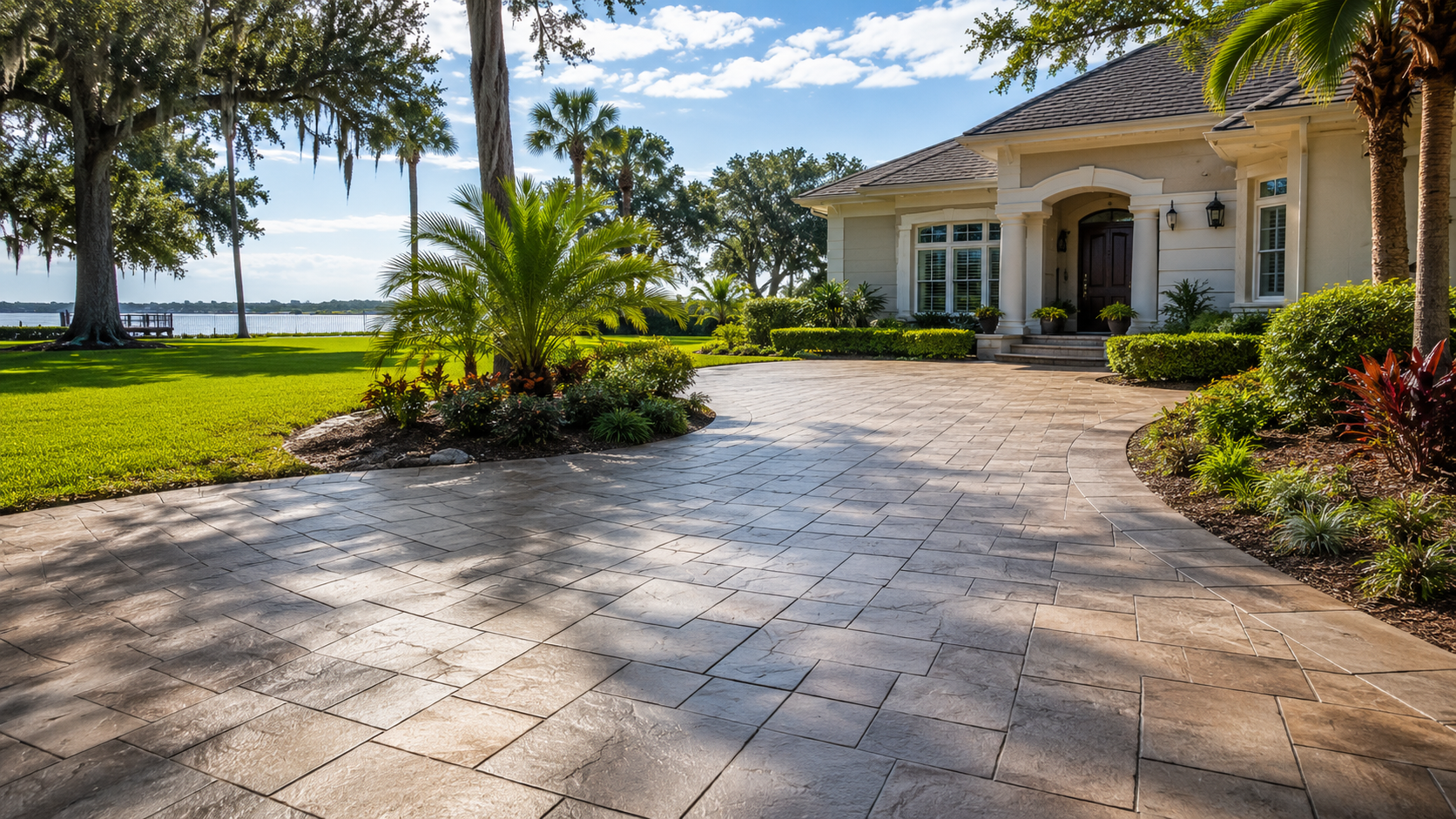
Stamped-concrete pricing is influenced by surface area, preparation, pattern complexity, colors, borders, detailing, drainage, access, and finish protection. Review the service page if decorative pattern and texture are likely to be a significant part of the project budget.
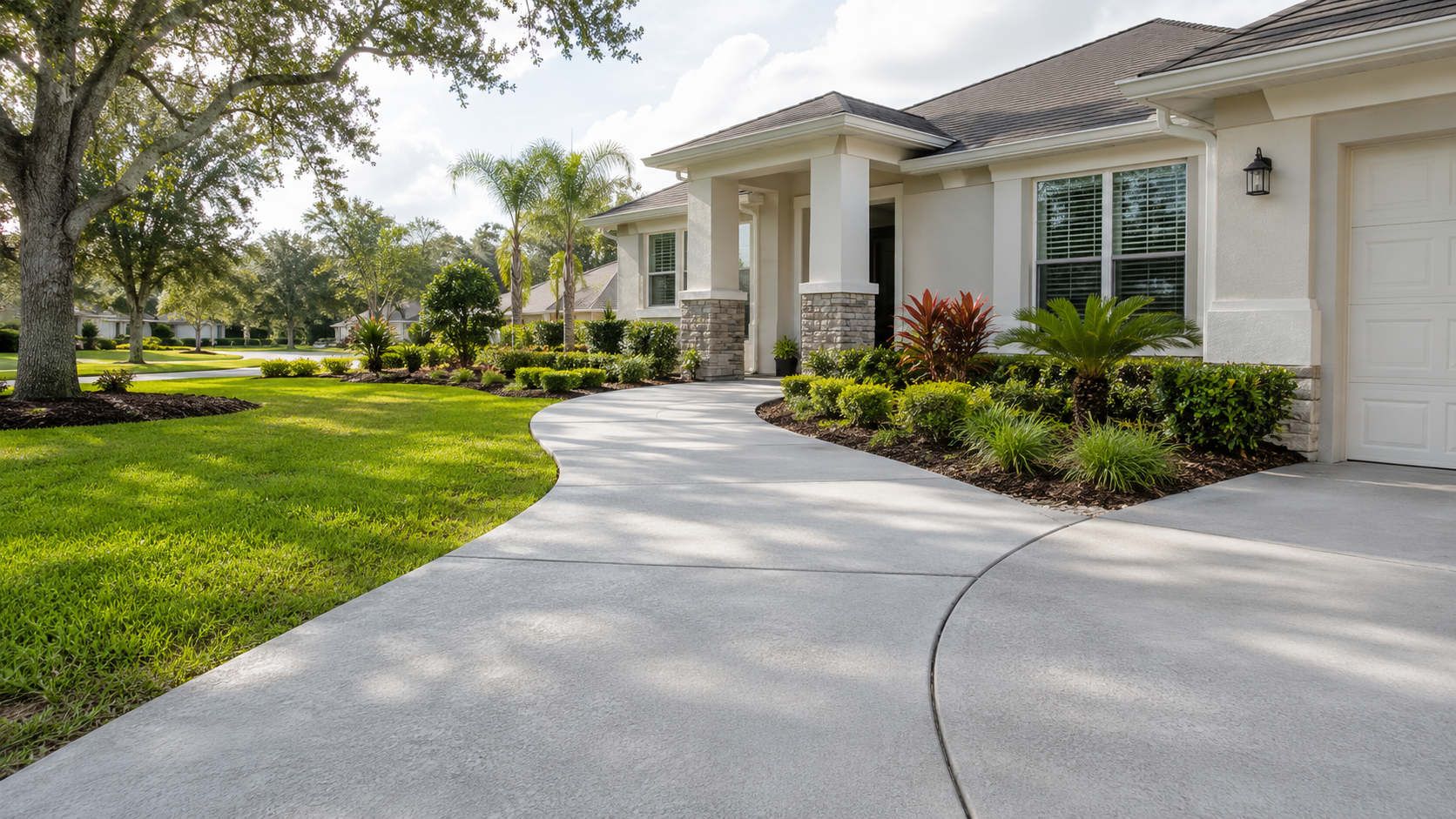
Repair cost depends on the extent of deterioration, affected area, preparation, drainage, existing movement, finish matching, and whether the surface remains a reasonable candidate for repair or resurfacing instead of partial or full replacement.
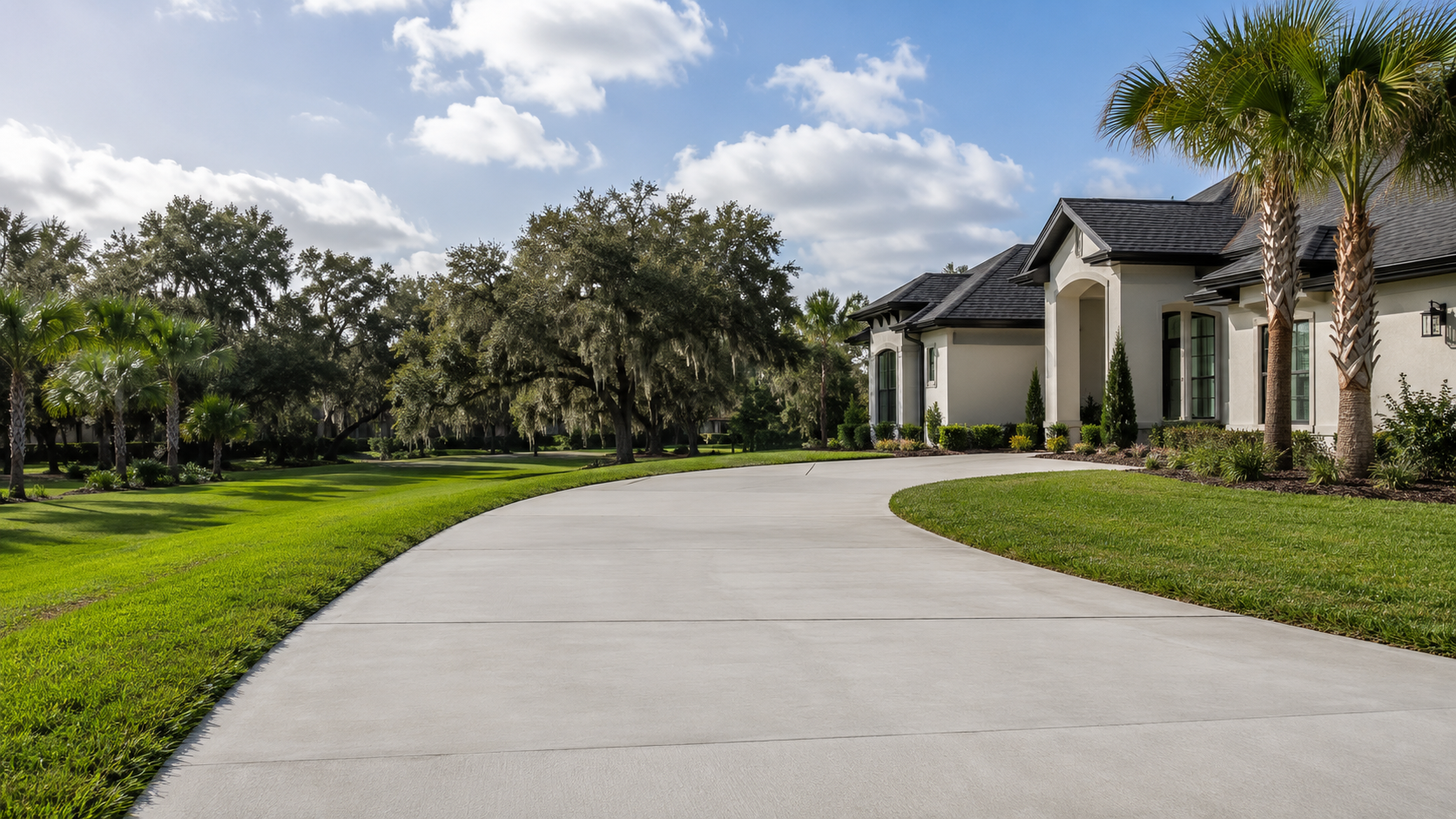
Driveway cost can change with square footage, removal, vehicle-use requirements, thickness, reinforcement where appropriate, widening, garage and street transitions, access, drainage, and finish selection.
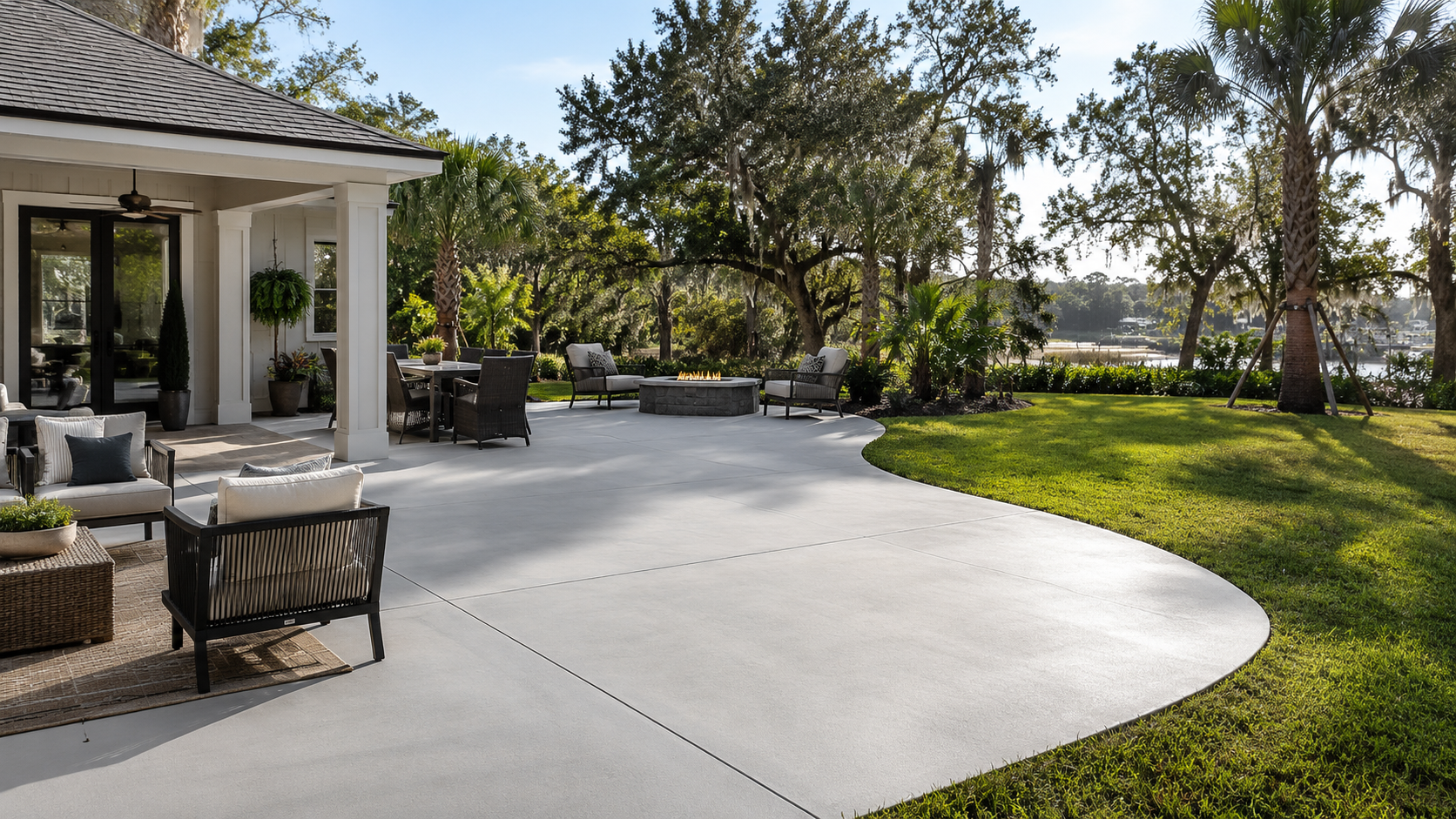
Patio pricing can vary with size, layout, access, grading, drainage, removal, connections with the home or surrounding hardscape, outdoor-living features, and whether the surface uses a standard, stamped, or decorative finish.
Concrete Cost FAQs for Jacksonville Properties
How much do concrete services cost in Jacksonville and Duval County?
Concrete costs vary by service type, project size, finish selection, access, site preparation, and local conditions. Basic repair or maintenance may cost much less than a new driveway, large patio, stamped concrete surface, or structural slab. The most accurate price comes from a property-specific estimate.
Which concrete services usually cost the most?
Stamped concrete, decorative concrete, large driveways, larger patios, and slabs with special preparation or reinforcement often cost more than simple flatwork. Projects involving demolition, drainage adjustments, tight access, right-of-way requirements, or custom finishes may also increase the total price.
Is concrete repair cheaper than replacement?
It can be, when the existing concrete remains suitable for localized repair or resurfacing. The cost comparison depends on the extent of deterioration, movement, drainage, base condition, affected area, preparation requirements, and whether repeated repairs would address the underlying problem. Where damage or site issues are widespread, partial or full replacement may become the more appropriate scope.
Does drainage affect concrete project cost?
Yes. Drainage can affect preparation, grading, layout, surface slope, and transitions to existing structures. In Jacksonville, heavy rainfall, low-lying areas, sandy soil, and stormwater movement can make drainage planning especially important for driveways, patios, slabs, and walkways.
Does stamped or decorative concrete cost more than standard concrete?
Stamped and decorative concrete commonly cost more than a basic broom-finished surface because color, pattern, texture, borders, scoring, detailing, finishing time, and protective treatments can add labor and material requirements. The size of the difference depends on the selected finish and the rest of the project scope.
Can permits or HOA rules affect pricing?
They can. Some projects may require permits, inspections, right-of-way review, HOA approval, or additional documentation depending on the location and scope of work. This is especially relevant for driveway aprons, sidewalks, drainage features, easements, public right-of-way areas, commercial properties, and managed communities.
How can I get the most accurate concrete estimate?
Provide the property location, project type, approximate dimensions, intended use, existing-surface condition, access details, drainage concerns, finish preferences, and any known HOA or local requirements. Photos, drawings, or measurements can also help clarify the request before project-specific pricing is discussed.