Standing Water & Drainage Problems Around Concrete in Jacksonville, FL
What Recurring Standing Water Can Reveal About Slope, Runoff & Concrete Support
Water that repeatedly collects on a driveway, patio, walkway, slab, or along the edge of a concrete surface can have several possible causes. A localized low spot may be involved, but ponding can also develop after settlement, grade changes, concentrated roof runoff, irrigation, landscaping work, blocked drainage paths, or changes to adjoining hardscape.
Not every wet area after a Jacksonville rain means the concrete has failed. The more useful questions are where the water comes from, where it collects, how long it remains, whether the pattern keeps returning, and whether other conditions such as cracking, settlement, erosion, staining, or uneven concrete are appearing at the same time.
The problem may involve the concrete surface itself, the surrounding property drainage, or a combination of both. Understanding that distinction matters before assuming that patching, sealing, resurfacing, or replacing the concrete will solve the problem.
Jacksonville FL Concrete helps route drainage-affected concrete project requests to local concrete professionals who may review the concrete surface, visible ponding, grade, runoff direction, movement, adjoining hardscape, surrounding property conditions, and project goals before discussing concrete-related options and next steps.
Request an Estimate
If recurring standing water, poor runoff, settlement, or drainage-related deterioration is affecting a driveway, patio, walkway, slab, or other concrete area, include enough information to show what happens during or after rainfall.
Photos are especially useful. Include where the water collects, approximately how long it remains, whether the concrete appears uneven, whether cracking or erosion is visible, where roof or irrigation water enters the area, and whether landscaping or surrounding hardscape has recently changed.
Have photos, drawings, or project notes? You can attach them through the form or send additional details to
Thank you for contacting us.
We will get back to you as soon as possible.
Please try again later.
Why Does Water Collect Around Concrete?
Standing water develops when water reaches an area faster than it can leave or when the surface and surrounding elevations direct runoff toward a low point.
The concrete itself may be responsible for the low area, but the source can also be somewhere else on the property.
Local Low Spots & Insufficient Surface Drainage
Water can collect where part of a driveway, patio or walkway sits lower than the surrounding surface or does not shed water effectively toward an appropriate drainage path.
A low spot does not automatically mean the entire concrete area needs to be replaced. Its size, location, depth, adjoining elevations, concrete condition and relationship to the surrounding runoff pattern all matter.
Settlement & Uneven Concrete Movement
Concrete that originally drained acceptably can begin holding water if one section settles relative to another.
Settlement can create a new low area at a joint, slab edge, garage approach, patio section, walkway connection or other transition. Where ponding appears together with cracking or a visible difference in elevation, the concrete condition and drainage problem should be considered together.
Roof Runoff & Downspout Discharge
A large amount of roof water can be concentrated into a relatively small part of the property.
Downspouts, gutter overflow and roof valleys can direct runoff toward driveways, walkways, patios, foundations, landscape beds or slab edges. In those situations, the water source may deserve attention before assuming the concrete itself needs major corrective work.
Landscaping, Irrigation & Changing Grade
Soil, mulch, landscape edging, new planting beds, irrigation changes and other property improvements can alter how water moves beside concrete.
If the surrounding landscape becomes higher than a slab edge or creates a barrier to runoff, water that once left the area may begin collecting alongside or flowing back toward the concrete.
Blocked or Altered Drainage Paths
Leaves, pine straw, soil, mulch, sediment, roots or later property improvements can interfere with an existing swale, inlet, channel, drain or other runoff path.
A recurring puddle may therefore be related to the route water uses after leaving the concrete rather than to the concrete surface itself.
Adjoining Hardscape & Surface Transitions
Concrete surfaces rarely function independently.
Driveways connect with garages, sidewalks and streets. Patios connect with homes, pools and lawns. Walkways connect driveways with entries and outdoor spaces.
When one surface is added, raised, widened, settled or replaced, it can change where water travels across adjoining areas. The connected surfaces should therefore be evaluated together rather than assuming each one has a separate drainage pattern.
Common Standing Water & Drainage Patterns to Look For
One puddle immediately after rain provides limited information. Repeated patterns are more useful because they can reveal where runoff is consistently being trapped or redirected.
Water Returning to the Same Low Area
A puddle that repeatedly forms in the same location can indicate a consistent low point, elevation change or runoff route.
The more useful observation is whether the puddle returns under similar conditions and whether the surrounding surface remains level and stable.
Water Collecting Along Concrete Edges
Repeated moisture along slab edges can be related to surrounding grade, irrigation, roof runoff, landscape beds or the way surface water leaves the concrete.
If soil, mulch or supporting material is also washing away, the issue includes what the water may be doing beside or beneath the edge.
Runoff Moving Toward a Garage, Entry or Structure
Drainage deserves closer attention when water repeatedly moves toward a garage threshold, door, building edge or another area where continued ponding interferes with normal property use.
The source, elevation and route of the runoff should be understood rather than treating the final puddle as the only problem.
Water Collecting at Joints & Surface Transitions
Low areas can develop where two concrete sections meet or where concrete connects with pavers, asphalt, lawn, pool decking, curbs, garage slabs or other hardscape.
These transitions can redirect runoff if one surface settles or sits at a different elevation from the adjoining area.
Cracking or Settlement Appearing With Drainage Problems
Standing water does not automatically cause concrete cracking.
However, runoff, erosion or changing support conditions can sometimes occur together with settlement and movement. Where ponding is accompanied by cracking, uneven sections, exposed edges or recurring movement, both conditions should be considered together.
For more detail about the cracking side of that relationship, review Why Concrete Cracks in Jacksonville.
Staining, Organic Buildup & Persistently Damp Areas
Areas that remain damp longer than surrounding concrete can develop staining, discoloration or organic buildup.
Those signs do not establish a structural problem, but they can help identify where moisture consistently remains and whether the pattern is changing over time.
Where Concrete Drainage Problems Commonly Appear
The cause and practical significance of standing water can vary according to the surface and how it connects with the property.
Driveways combine vehicle loads with garage transitions, street connections, joints, drainage, edges, and relatively large exposed surface areas.
Cracking should be considered together with vehicle use, settlement, base support, runoff, adjoining panels, joint condition, and whether the driveway has uneven or deteriorated sections.
Patios often connect directly with the home, lawn, walkways, pool areas and planting beds.
Water may collect where a patio has a localized low spot, adjoining landscaping traps runoff, roof water is concentrated near the surface, or an existing section has settled.
Walkways can hold water where individual sections settle, landscape grade rises beside the path, roof runoff crosses the route, or driveways and patios discharge toward the walkway.
Standing water becomes especially noticeable where the path is part of regular pedestrian access to an entry, gate or outdoor area.
Shed slabs, garage slabs, equipment pads and other concrete areas should be considered together with the structure or equipment they support and the surrounding drainage.
Water collecting beside an edge, against a structure or around a utility area may involve both surface elevation and the drainage conditions around the slab.
Poolside & Landscape-Adjacent Concrete
Concrete near pools, lawns, planting beds and irrigation systems can receive moisture from several sources beyond rainfall.
Pool use, irrigation, soil grade, landscaping, adjoining deck surfaces and runoff from other hardscape can all influence where water collects.
Jacksonville Conditions That Can Affect Drainage Around Concrete
Drainage around concrete in Jacksonville should be evaluated at the individual-property level. The city includes neighborhoods with ditches and swales, curb-and-gutter systems, stormwater inlets, established landscaping, coastal communities, waterfront areas, newer developments and older properties where drainage patterns may have changed over time.
Heavy Rainfall & Changing Runoff Patterns
Heavy or sustained rainfall can make drainage patterns much easier to see than they are during dry weather.
A low area that appears insignificant during light rain may collect considerably more water when roof runoff, adjoining hardscape and surrounding property drainage are all contributing at the same time.
The existence of heavy rain does not by itself mean the concrete is defective. What matters is whether water repeatedly remains in an unintended area and whether the pattern appears to be affecting usability, support or surrounding surfaces.
Ditches, Swales, Inlets & Neighborhood Drainage Paths
Jacksonville neighborhoods use different combinations of ditches, swales, curbs, gutters, inlets, culverts and stormwater ponds.
Property drainage should therefore be considered in relation to the drainage path available beyond the concrete. Filling, obstructing or altering an established drainage path can affect how water leaves more than one part of a property.
Property Grade, Low Areas & Hardscape Transitions
Drainage problems can develop even where there is no obvious municipal drainage issue.
Small elevation differences between a driveway, garage, patio, walkway, landscape bed or adjoining surface can determine whether water continues downhill or becomes trapped.
This is especially relevant when an existing surface settles or a newer surface is added beside older hardscape.
Roof Drainage, Irrigation & Established Landscaping
Mature landscaping, irrigation systems, roof drainage and later property improvements can all change the amount and direction of water reaching concrete.
A drainage pattern can therefore change even when no new concrete has recently been installed.
When ponding begins after landscaping, gutter, irrigation or hardscape work, that change can be useful context for identifying where the water is coming from.
Driveway, Culvert & Right-of-Way Considerations
Drainage work becomes more complicated when the affected area reaches a driveway connection, ditch, culvert, public drainage feature or City right-of-way.
When Should Standing Water Around Concrete Be Looked At More Closely?
A puddle shortly after a heavy storm does not automatically mean there is a serious concrete or drainage problem.
Closer review becomes more useful when the pattern is repeated, persistent, changing, or accompanied by other surface or property conditions.
Signs worth noting include:
- The same puddle repeatedly remains after surrounding areas have drained
- Runoff consistently moves toward a garage, entry, door or structure
- Concrete has visibly settled or become uneven
- Water collects where two concrete or hardscape surfaces meet
- Soil, mulch or supporting material is washing away from an edge
- Cracking or joint movement is developing in the same area
- Drainage changed after landscaping, irrigation, gutter, utility or hardscape work
- An established drain, swale, ditch or outlet appears blocked or altered
- A low area is becoming larger or holding water for longer periods
- Persistent moisture is affecting normal vehicle or pedestrian use
None of these signs automatically determines the corrective work.
They indicate that the water source, runoff route, concrete condition, surrounding elevations and property drainage should be considered together before assuming that patching, sealing or replacing the surface will solve the issue.
Can Standing Water & Concrete Drainage Problems Be Corrected?
Often, but the appropriate correction depends on why the water is collecting.
The most important distinction is whether the primary problem is:
- the source or route of the runoff;
- the concrete surface itself;
- surrounding property grade/drainage;
- or a combination of those conditions.
Redirecting Concentrated Water Sources
Restoring an Existing Drainage Path
Where a downspout, gutter overflow, irrigation system or another identifiable source is repeatedly concentrating water next to concrete, addressing that source may be more appropriate than altering an otherwise serviceable slab.
The relevant trade may therefore be a roofing, gutter, irrigation, landscaping or drainage professional rather than a concrete contractor.
A blocked or altered property drain, swale, ditch, channel or outlet may need to be cleared or restored so runoff can continue along its intended route.
This type of work can fall outside ordinary concrete scope, particularly where the drainage feature serves a larger property area or connects with regulated infrastructure.
Addressing a Localized Concrete Low Spot or Settlement
Repairing Drainage-Affected Concrete
If ponding is associated with one concrete section settling or a localized low area developing, the surface itself may need closer review.
Depending on condition and extent, the project may involve localized repair, selective replacement, elevation correction or another property-specific approach.
Where repeated runoff or changing support conditions appear alongside cracking, edge deterioration, settlement or other concrete damage, Concrete Repair & Resurfacing may become the relevant transactional next step.
The concrete repair should be considered together with the contributing water or support condition rather than treating only the visible damage.
Considering Partial or Full Replacement
When the Problem Extends Beyond the Concrete
Replacement may deserve consideration when the existing surface elevation, slope, widespread settlement, layout or deterioration prevents the drainage problem from being addressed reasonably within a localized repair scope.
Review Concrete Repair vs. Replacement when the question is whether damaged concrete should be preserved, selectively rebuilt or replaced more broadly.
Some drainage problems cannot reasonably be corrected by changing the concrete.
Issues involving broad yard grading, stormwater systems, major roof runoff, retaining conditions, drainage pipes, public infrastructure, flood conditions or larger site drainage may require another appropriate contractor or design professional.
For serviceable concrete where routine care is still appropriate, review Concrete Maintenance.
How to Reduce Avoidable Drainage Problems Around Concrete
Not every drainage problem can be prevented, particularly after unusually intense rainfall or later changes around a property.
Thoughtful planning can nevertheless reduce avoidable ponding and make changing drainage conditions easier to recognize.
Plan Grade, Elevation & Runoff Before New Concrete Is Placed
Drainage should be considered during layout and site preparation rather than after a driveway, patio, slab or walkway is complete.
Concrete elevations and transitions should work with the surrounding property so runoff has an appropriate route away from areas where ponding would create a recurring problem.
For deeper installation detail, review the Concrete Installation Process.
Coordinate Roof Water, Irrigation & Landscaping
Downspouts, irrigation, planting beds, mulch, landscape edging and surrounding soil should be considered alongside the concrete rather than treated as completely independent systems.
Later changes to those areas can alter a previously acceptable drainage pattern.
Protect Concrete Edges & Surrounding Support
Concentrated runoff can move loose soil or landscape material beside concrete.
Watching for exposed edges, washed-out material or settlement can help identify a changing support condition before the visible concrete problem becomes more extensive.
Keep Property Drainage Paths Clear
Leaves, pine straw, soil, mulch, sediment and landscape debris can interfere with small drainage channels, drains and other runoff paths.
Where the drainage feature is part of public or shared infrastructure, maintenance responsibility should be confirmed rather than altered by the property owner without appropriate review.
Monitor New Low Spots, Cracks & Settlement
A drainage pattern that changes over time can indicate that elevations have changed.
Watching recurring ponding together with joints, cracks, slab edges and surface elevation can help distinguish a stable wet area from a developing concrete problem.
For serviceable concrete where routine care is still appropriate, review Concrete Maintenance.
Helpful Resources for Understanding Concrete Drainage Problems
Once the drainage pattern is clearer, the next useful question depends on whether the concern involves cracking, existing concrete deterioration, repair scope or future installation.
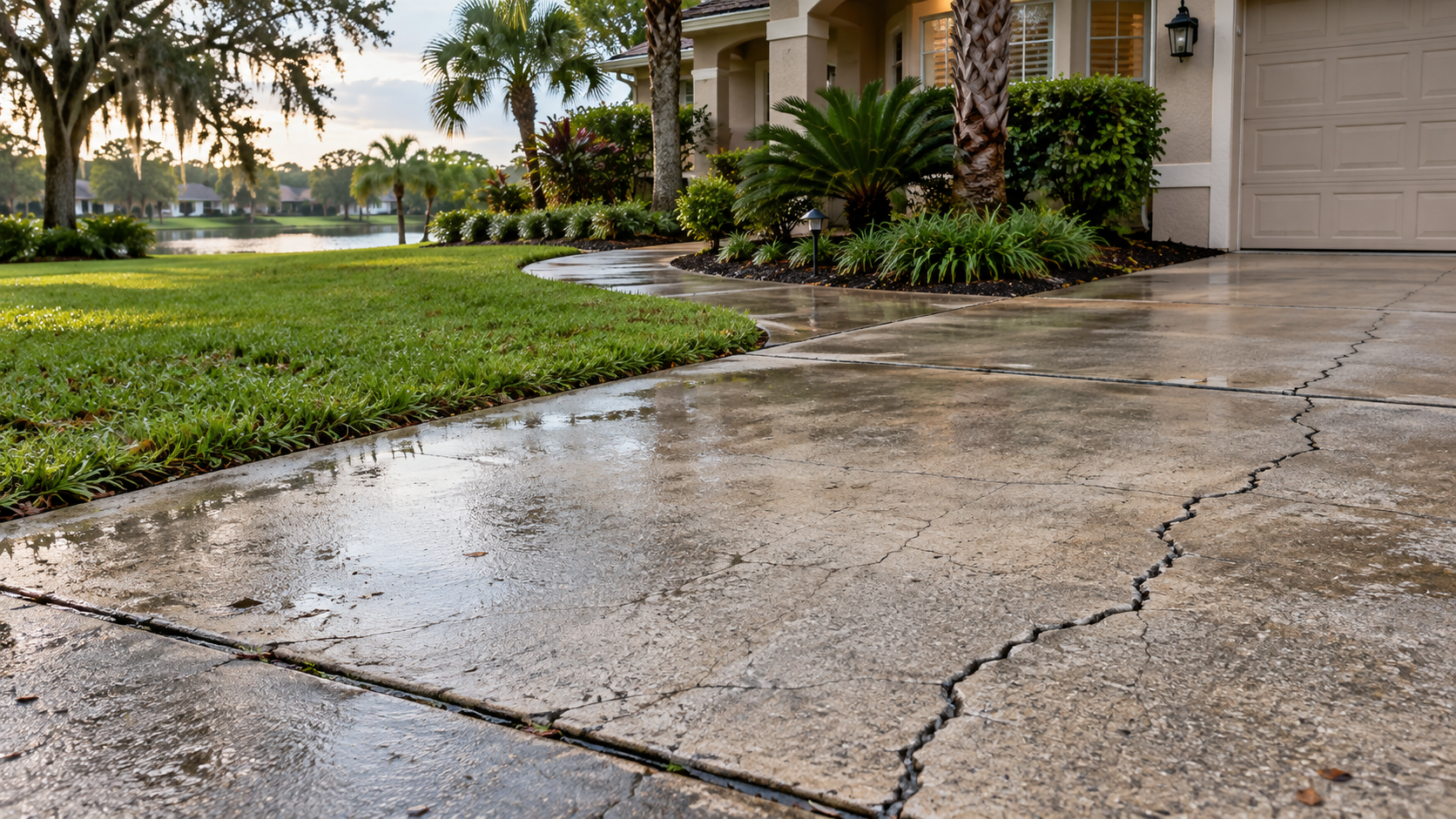
If standing water appears alongside cracking, settlement or uneven concrete, review how drainage, support changes, shrinkage, joints and movement can affect what the visible crack may indicate.
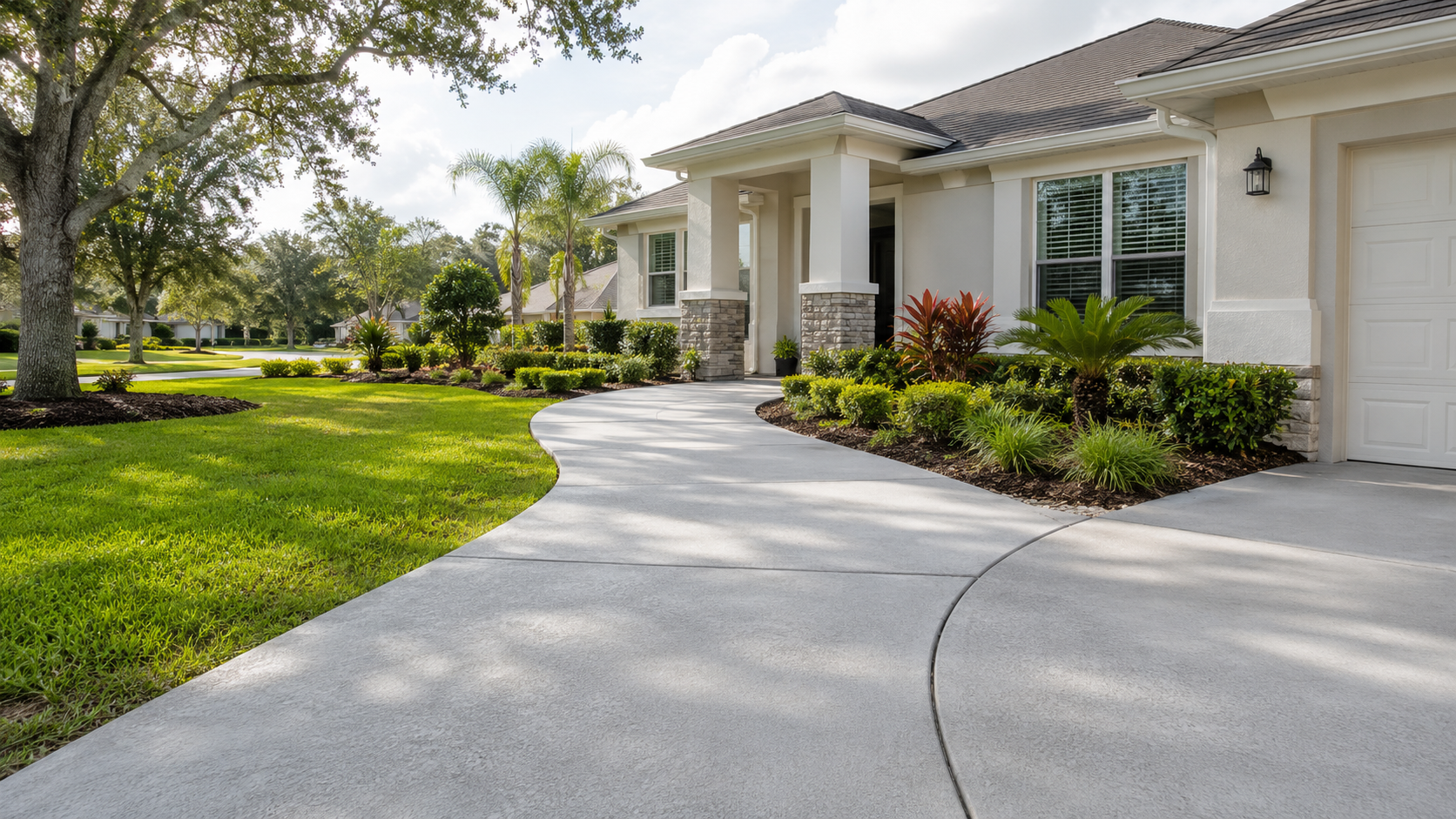
If runoff, settlement or erosion has already contributed to concrete deterioration, review repair and resurfacing options to understand when localized restoration may still be appropriate.
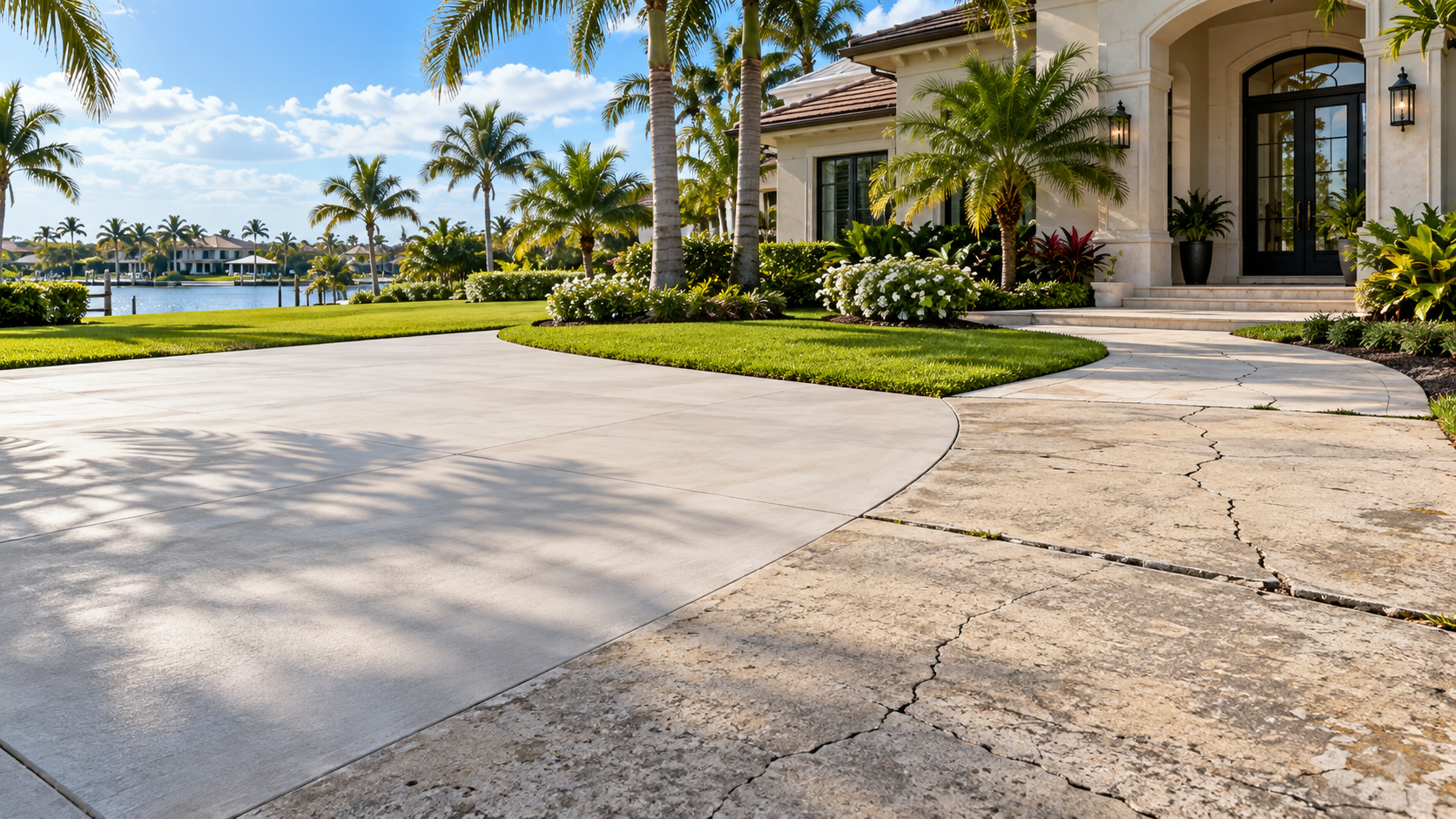
If the drainage problem is associated with widespread movement, recurring damage, significant elevation differences or a layout that no longer drains effectively, compare repair, partial replacement and full replacement before defining the project scope.
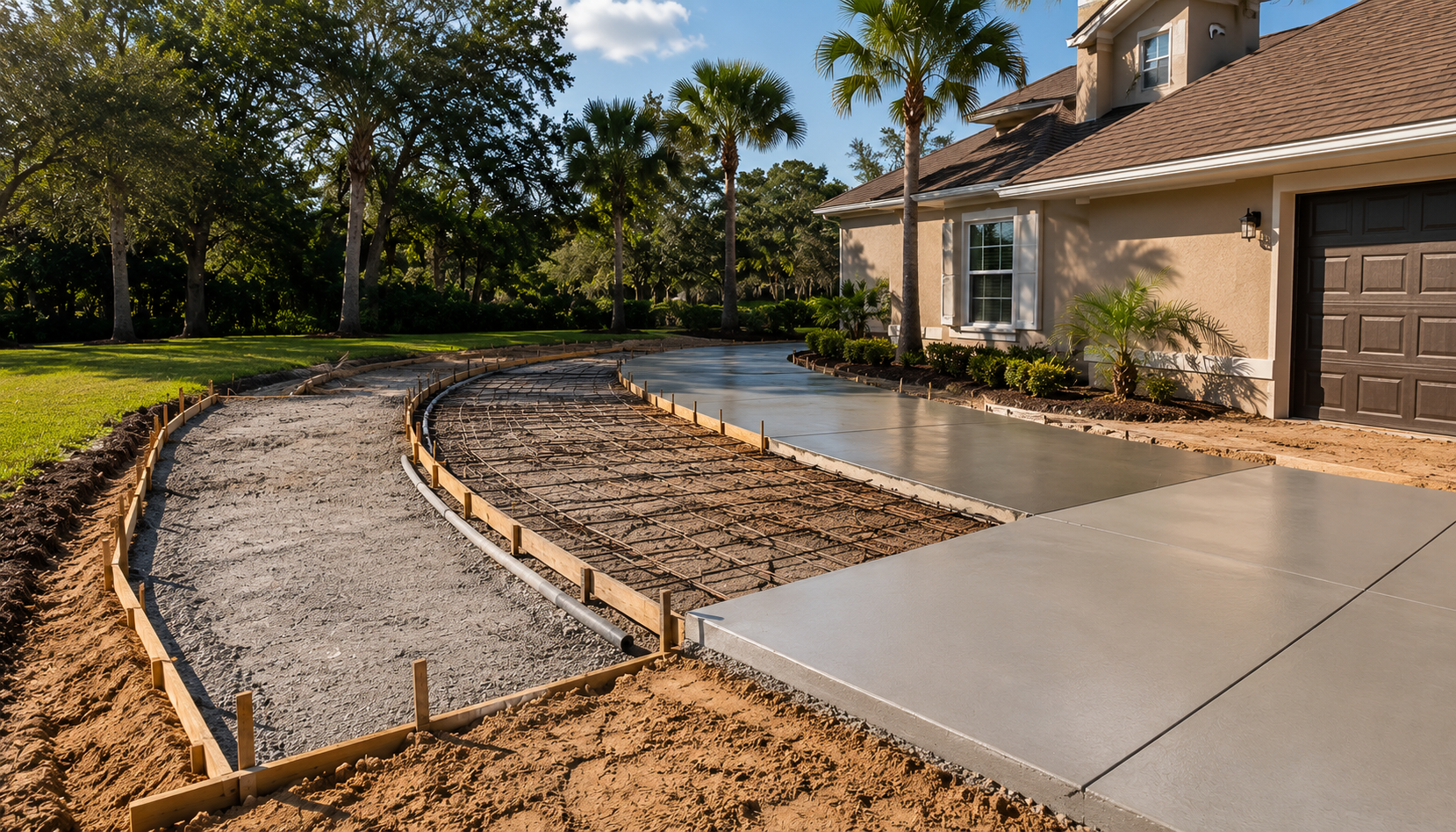
If new or replacement concrete is being considered, review how site evaluation, grading, base preparation, elevations, surface transitions and drainage fit into the installation process before concrete is placed.
Request an Estimate for Drainage-Affected Concrete in Jacksonville
If standing water, poor runoff, settlement or drainage-related deterioration is affecting a driveway, patio, walkway, slab or other concrete surface, provide enough detail to show how the water behaves around the property.
Include where the water originates if known, where it collects, how long it remains, whether the concrete has cracked or moved, whether soil or support is washing away, and whether roof drainage, irrigation, landscaping or adjoining hardscape has recently changed.
Drainage-affected concrete requests may be considered throughout Jacksonville and nearby Northeast Florida communities. Review Concrete Services in Atlantic Beach, Concrete Services in Fleming Island, Concrete Services in Jacksonville Beach, Concrete Services in Neptune Beach, Concrete Services in Orange Park, Concrete Services in Ponte Vedra Beach, and Concrete Services in St. Augustine.
👉 Explore our full Jacksonville concrete service areas to find your community.
Jacksonville FL Concrete helps route concrete-related project requests to local concrete professionals who may contact you about the concrete condition, possible project scope, availability, pricing factors and next steps. Where the primary issue appears to involve a broader property drainage system rather than the concrete itself, another type of contractor or specialist may be more appropriate.
They can contribute indirectly. Concentrated runoff, erosion, standing water, washout, or changes in soil and base support can contribute to settlement or movement around exterior concrete. Where cracking and drainage problems occur together, both conditions should be considered.
Not necessarily. Some fine cracks may primarily affect appearance, while others deserve closer evaluation because they are changing, associated with movement, accompanied by deterioration, or affecting how the surface is used. The crack and surrounding concrete should be considered together.
Concrete Drainage & Standing Water FAQs for Jacksonville Properties
Is standing water on concrete always a problem?
No. Water can remain temporarily after rainfall, washing or irrigation. More useful questions are whether it repeatedly collects in the same unintended location, how long it remains compared with surrounding areas, whether the drainage pattern has changed and whether cracking, settlement, erosion or surface deterioration is developing nearby.
Why does water keep pooling in the same part of my driveway or patio?
Repeated ponding can be associated with a localized low area, insufficient surface drainage, settlement, surrounding landscape grade, roof runoff, irrigation, adjoining hardscape or an altered drainage path. The surrounding property should be considered together with the concrete.
Can standing water cause concrete to crack?
Standing water by itself does not automatically cause concrete to crack. However, concentrated runoff, erosion, washout or changing support conditions can sometimes contribute to settlement or movement, and those conditions can occur alongside cracking. The drainage pattern and concrete condition should be evaluated together.
Can a low spot in concrete be repaired?
Potentially. The appropriate approach depends on the size and location of the low area, whether the slab has settled, the condition of the surrounding concrete, the required elevations and where the water needs to go. Some situations may support localized work, while broader grade or settlement problems may require partial or full replacement.
Does sealing concrete fix standing-water problems?
No. A sealer may provide surface protection where appropriate, but it does not correct settlement, poor elevation, blocked drainage paths, erosion or runoff being directed toward the wrong area.
Can landscaping or irrigation create drainage problems around concrete?
Yes. Added soil, mulch, edging, planting beds, irrigation changes and other landscaping work can alter where water flows or collects beside concrete. These factors are particularly relevant when a drainage pattern changes after property improvements.
Can roof runoff cause water to collect around concrete?
Yes. Downspouts, gutter overflow and roof valleys can concentrate substantial amounts of water into a relatively small area. If that discharge reaches a driveway, walkway, patio or slab edge, the water source should be considered before assuming the concrete is the primary problem.
Do drainage changes around a driveway require a permit in Jacksonville?
Sometimes. Requirements depend on the specific location, jurisdiction and scope. Work entirely within private property may differ from drainage, culvert, driveway or construction work within a City road, right-of-way or easement. Applicable requirements should be confirmed for the individual project.