Why Concrete Cracks in Jacksonville, FL
What Concrete Cracks Can Reveal About Movement, Drainage & Support
Concrete can crack for many different reasons, and visible cracking does not always mean the same thing. Some cracks develop as newly placed or hardened concrete loses moisture and changes volume, while others may be associated with settlement, restrained movement, drainage, loss of support, joint layout, loads, or changes around the property.
The useful question is not simply whether a crack exists. Its location, pattern, whether adjoining concrete has moved, whether water collects nearby, the condition of surrounding surfaces, previous repairs, and how the area is used can all provide important context.
Jacksonville FL Concrete helps route cracked or damaged concrete project requests to local concrete professionals who may review the affected surface, visible cracking, movement, drainage, surrounding property conditions, intended use, and project goals before discussing available options and next steps.
Request an Estimate
If cracking, settlement, uneven concrete, surface deterioration, or recurring damage is affecting a driveway, patio, walkway, slab, or other exterior concrete surface, photos and project details can help provide useful context.
Include the approximate affected area, how long the condition has been noticeable, whether the crack appears to be changing, any standing-water or drainage concerns, previous repairs, and how the surface is normally used.
Have photos, drawings, or project notes? You can attach them through the form or send additional details to
Thank you for contacting us.
We will get back to you as soon as possible.
Please try again later.
Why Does Concrete Crack?
Concrete changes dimension as it loses moisture and responds to temperature, restraint, loads, and changing support conditions. Cracking can develop when stresses concentrate in the concrete rather than being accommodated through joints or normal movement.
More than one factor can also be involved, which is why the surrounding slab and property conditions matter as much as the crack itself.
Plastic Shrinkage & Early Moisture Loss
Plastic shrinkage cracking can develop while newly placed concrete is still fresh.
When moisture leaves the exposed surface faster than it can be replaced from within the concrete, the upper surface can begin to contract before the concrete has fully hardened. Weather, evaporation, finishing conditions, placement timing, and early curing can all influence this type of cracking.
This is primarily an early installation-stage condition rather than something created years later by ordinary property use.
Drying Shrinkage & Restrained Movement
Concrete continues losing moisture after hardening and normally changes volume as it dries.
Shrinkage does not automatically create a visible random crack. Problems are more likely where movement is restrained by slab shape, adjoining concrete, foundations, fixed structures, reinforcement, or other conditions that prevent the surface from moving freely.
This is one reason joint layout is an important part of exterior concrete installation.
Temperature & Moisture Changes
Exterior concrete repeatedly heats, cools, wets and dries.
Sun exposure, shade, rainfall, irrigation, seasonal temperature changes, and surrounding property conditions can all cause small dimensional changes. Cracking can develop where those movements become concentrated or restrained around corners, joints, edges, transitions, or connected structures.
Joint Placement & Restraint
Concrete joints help accommodate movement and influence where shrinkage-related cracking occurs.
Contraction joints create planned locations where shrinkage movement can concentrate rather than allowing random cracks to develop anywhere across the surface. Isolation joints can also separate slabs from structures or other concrete areas that need to move independently.
Joints help manage cracking; they do not make concrete completely motionless or guarantee a crack-free surface.
Settlement, Erosion & Loss of Support
Exterior concrete depends on reasonably consistent support beneath the slab.
If underlying material settles, erodes, washes out, or changes relative to adjoining areas, sections of concrete can lose support or move differently from the rest of the surface. Cracking may then develop as the slab responds to those changed conditions.
Cracking combined with visible settlement, uneven elevations, washed-out edges, or recurring damage deserves different consideration from an isolated fine crack in otherwise stable concrete.
Loads, Use & Property Changes
Concrete surfaces are designed and used differently.
Driveways carry vehicles, walkways carry pedestrian traffic, patios support outdoor-living use, and slabs may support equipment, sheds, garages, or other structures. Changes in loading, utility work, later additions, adjoining construction, altered drainage, or other property changes can affect how stress is distributed through an existing surface.
A crack therefore makes more sense when considered together with how the area is used and what has changed around it.
Common Concrete Crack Conditions & What to Look For
The appearance of a crack can provide useful clues, but it should not be treated as a diagnosis by itself. Movement, surrounding deterioration, drainage, joints, support conditions, and whether the crack is changing are often more useful than width or appearance alone.
Fine or Hairline Surface Cracks
Fine cracks may appear as isolated narrow lines or shallow surface patterns.
Some are associated with early-age or drying shrinkage, while very fine surface crazing may primarily affect appearance. A narrow crack by itself does not establish whether the surface has a larger support or movement problem.
What matters more is whether it changes, whether adjoining concrete remains level and stable, and whether other deterioration develops nearby.
Random Cracks Across a Surface
A crack crossing a driveway, patio, walkway, or slab may be associated with shrinkage, restraint, joint layout, settlement, support changes, or a combination of conditions.
Its location relative to joints, corners, changes in slab shape, low areas, drainage paths, and visible movement can help provide context.
Cracks Near Joints, Edges & Transitions
Cracking may appear near control joints, slab edges, driveway-to-garage transitions, walkway connections, steps, corners, utility openings, or other locations where geometry and support change.
These areas can experience different movement or loading from the middle of a more uniform slab.
Cracks With Uneven Concrete
If one side of a crack is visibly higher or lower than the other, the condition involves movement rather than simply a surface line.
Settlement, lifting, loss of support, roots, erosion, drainage, or another site condition may be involved. The amount of movement, affected area, surface use, and whether the condition continues to change can influence the next step.
Recurring or Changing Cracks
A crack that reopens after repair, becomes more noticeable, or repeatedly returns in the same area may indicate that the condition contributing to movement is still present.
That does not automatically mean the entire surface needs replacement, but repeated movement makes the underlying condition more important than simply filling the visible crack.
Cracking With Spalling or Surface Breakdown
Cracks sometimes occur together with chipped edges, loose material, flaking, joint deterioration, worn surfaces, or broader concrete breakdown.
In those cases, the condition of the surrounding concrete should be considered rather than treating the crack line as an isolated cosmetic issue.
Where Concrete Cracking Commonly Appears
The same crack can have different practical implications depending on the surface and how that area is used.
Driveways combine vehicle loads with garage transitions, street connections, joints, drainage, edges, and relatively large exposed surface areas.
Cracking should be considered together with vehicle use, settlement, base support, runoff, adjoining panels, joint condition, and whether the driveway has uneven or deteriorated sections.
Patio cracking can occur near changes in shape, adjoining structures, pool areas, walkways, landscape beds, drainage paths, doors, or other places where exposure and support conditions change.
The useful distinction is whether the concern is mainly cosmetic or is accompanied by settlement, drainage problems, movement, or deterioration that affects outdoor use.
Walkways can be affected by settlement, roots, irrigation, drainage, edge support, landscaping, and transitions into driveways, patios, entries, gates, or steps.
Cracking becomes more important when sections also become uneven or move relative to adjoining surfaces, particularly where the route is used regularly for pedestrian access.
Slab cracking should be considered in relation to what the concrete supports.
Shed slabs, garages, workshops, equipment pads, additions, and other applications can involve different loads, preparation requirements, reinforcement considerations, base conditions, and connections to surrounding structures.
Stamped and decorative surfaces can crack for the same basic reasons as other concrete, but restoration may be more visually complicated because color, texture, scoring, pattern, borders, and existing finish must also be matched where possible.
Appearance should not distract from understanding whether movement, support, drainage, or another underlying condition is contributing to the crack.
Jacksonville Conditions That Can Influence Concrete Cracking
Jacksonville does not have one single concrete-cracking problem. Conditions vary between coastal, inland, older, newly developed, landscaped, waterfront-adjacent, compact-lot, and larger residential properties.
The useful local question is whether surrounding moisture, drainage, support, landscaping, exposure, or property changes are contributing to the condition seen in the concrete.
Rainfall, Runoff & Changing Support
Jacksonville receives substantial annual rainfall, with the wettest normal period concentrated in summer and early fall.
Rain itself does not automatically crack concrete. Problems can develop where roof runoff, repeated ponding, erosion, redirected drainage, washout, or changing moisture conditions affect the material supporting the slab.
Where cracking occurs together with settlement, low areas, washed-out edges, or recurring water collection, drainage should be considered as part of the condition rather than treating only the visible crack.
Grade, Fill & Base Conditions
Exterior concrete depends on the conditions below and around it.
Existing fill, previously disturbed areas, grading, compaction, base preparation, erosion, and later property changes can create different support conditions across a driveway, patio, walkway, or slab.
A crack associated with settlement or uneven concrete can therefore represent a very different condition from a fine shrinkage crack in an otherwise level and stable surface.
Heat, Sun & Early-Age Moisture Loss
Jacksonville's warm conditions can affect freshly placed concrete during placement, finishing and curing.
Surface temperature, sunlight, wind, humidity and evaporation all influence how quickly moisture can leave new concrete.
Appropriate installation and curing practices are therefore relevant to reducing avoidable early-age cracking.
For existing hardened concrete, repeated heating, cooling, wetting and drying also create normal movement that the slab and its joints must accommodate.
Landscaping, Roots & Irrigation
Concrete frequently sits beside lawns, trees, palms, planting beds, irrigation lines, downspouts, fences and other exterior features.
Roots, changing moisture, concentrated irrigation, drainage paths or later landscaping work can alter conditions around slab edges or interfere with surrounding support.
When cracking develops close to roots, consistently wet areas, irrigation or recent landscape changes, those conditions should be part of the evaluation.
Coastal Exposure & Surface Deterioration
Properties in Atlantic Beach, Jacksonville Beach, Neptune Beach, Ponte Vedra Beach, St. Augustine and other exposed areas can experience different moisture and salt-air conditions from more protected inland properties.
Coastal exposure by itself does not explain a crack. Surface wear, staining, sealer deterioration, moisture exposure, movement, joints and support conditions should still be evaluated separately rather than assuming cracking has one coastal cause.
Hardscape Connections & Property Changes
Concrete rarely functions as an isolated surface.
Driveways connect with garages, streets and walkways. Patios connect with homes, pools and landscaping. Walkways join entries, driveways and outdoor-living areas.
Later additions, utility work, extensions, drainage changes, landscaping projects or new connected concrete can create different support and movement relationships across the property. Those transitions can become relevant when cracking develops near the changed area.
When Should a Concrete Crack Be Looked At More Closely?
A crack deserves closer attention when the surrounding condition suggests that more than ordinary surface shrinkage or minor appearance change may be involved.
Signs worth noting include:
- One side of the crack sitting higher or lower than the other
- Several sections settling or moving
- A crack that appears to widen or change over time
- A crack that returns after previous repair
- Standing water or recurring drainage problems near the damaged area
- Washed-out soil or loss of support around slab edges
- Several intersecting cracks across a broader area
- Broken, loose, spalled, or heavily deteriorated concrete around the crack
- Uneven concrete affecting normal vehicle or pedestrian use
- Damage that appeared after utility, drainage, landscaping, loading, or property changes
None of these conditions automatically determines whether the concrete should be repaired or replaced.
They mean the crack should be considered together with the surrounding surface, movement, support, drainage, intended use, and the extent of the affected area before selecting a corrective scope.
Can Cracked Concrete Be Repaired?
Cracked concrete does not automatically require complete replacement.
Depending on the condition, several directions may be considered:
Localized Repair
Resurfacing
Localized repair may make sense when cracking or deterioration affects a limited area and the surrounding concrete remains generally stable and usable.
Resurfacing may be considered when an existing surface remains suitable for restoration but has broader wear or appearance concerns.
It should not be treated as a substitute for correcting active movement or unsuitable underlying concrete.
Partial Replacement
Full Replacement
Selective replacement can make sense when one or several sections have failed while adjoining concrete remains serviceable.
Broader replacement becomes more relevant when cracking, movement, settlement, support problems, drainage issues, repeated failed repairs, or layout changes affect a larger portion of the surface.
The important question is not simply whether the visible crack can be filled. It is whether the proposed scope addresses the condition associated with the cracking.
For a fuller comparison of these options, review Concrete Repair vs. Replacement.
If repair or resurfacing appears to remain viable, review Concrete Repair & Resurfacing.
For broader project-budget context, see Cost of Concrete Services in Jacksonville.
How Avoidable Concrete Cracking Can Be Reduced
No exterior concrete surface should be described as completely crack-proof. Concrete naturally changes volume and responds to moisture, temperature, restraint, loading, and support conditions.
Thoughtful design, installation and maintenance can nevertheless reduce avoidable cracking and help manage normal movement.
Consistent Support, Grading & Drainage
Concrete performs best when the supporting area is prepared for the intended surface and use.
Excavation, grading, compaction, base preparation, runoff direction, drainage, and protection against erosion should reflect the property conditions rather than follow one identical approach on every site.
Joint Planning & Movement Control
Contraction joints help influence where shrinkage-related cracking occurs, while isolation joints allow adjoining elements to move more independently.
Joint layout should reflect slab geometry, dimensions, connections, corners, transitions and intended use.
Placement, Finishing & Curing
Weather, concrete temperature, evaporation, finishing timing and curing can influence early-age cracking.
Fresh concrete requires suitable moisture and temperature conditions while it develops strength, and premature moisture loss can contribute to plastic shrinkage cracking.
Thickness, Support & Intended Use
A residential driveway, pedestrian walkway, patio and equipment slab do not carry identical loads.
Concrete thickness, underlying support, reinforcement where appropriate, joint planning and other installation decisions should reflect how the surface will actually be used.
Reinforcement should not be described as making concrete crack-proof; where used, it forms part of the broader crack-control and load-management approach.
Drainage, Joint Care & Monitoring
After installation, functioning drainage, reasonably clear joints, visible edges, and early attention to changing cracks or settlement can make developing conditions easier to recognize.
Routine maintenance cannot correct active settlement or loss of support, but it can help distinguish normal surface care from conditions that deserve repair evaluation.
For deeper installation detail, review the Concrete Installation Process.
Helpful Resources for Understanding Concrete Cracks
Once the crack condition and surrounding property factors are clearer, the next question usually involves repair scope, replacement, installation, or ongoing care.
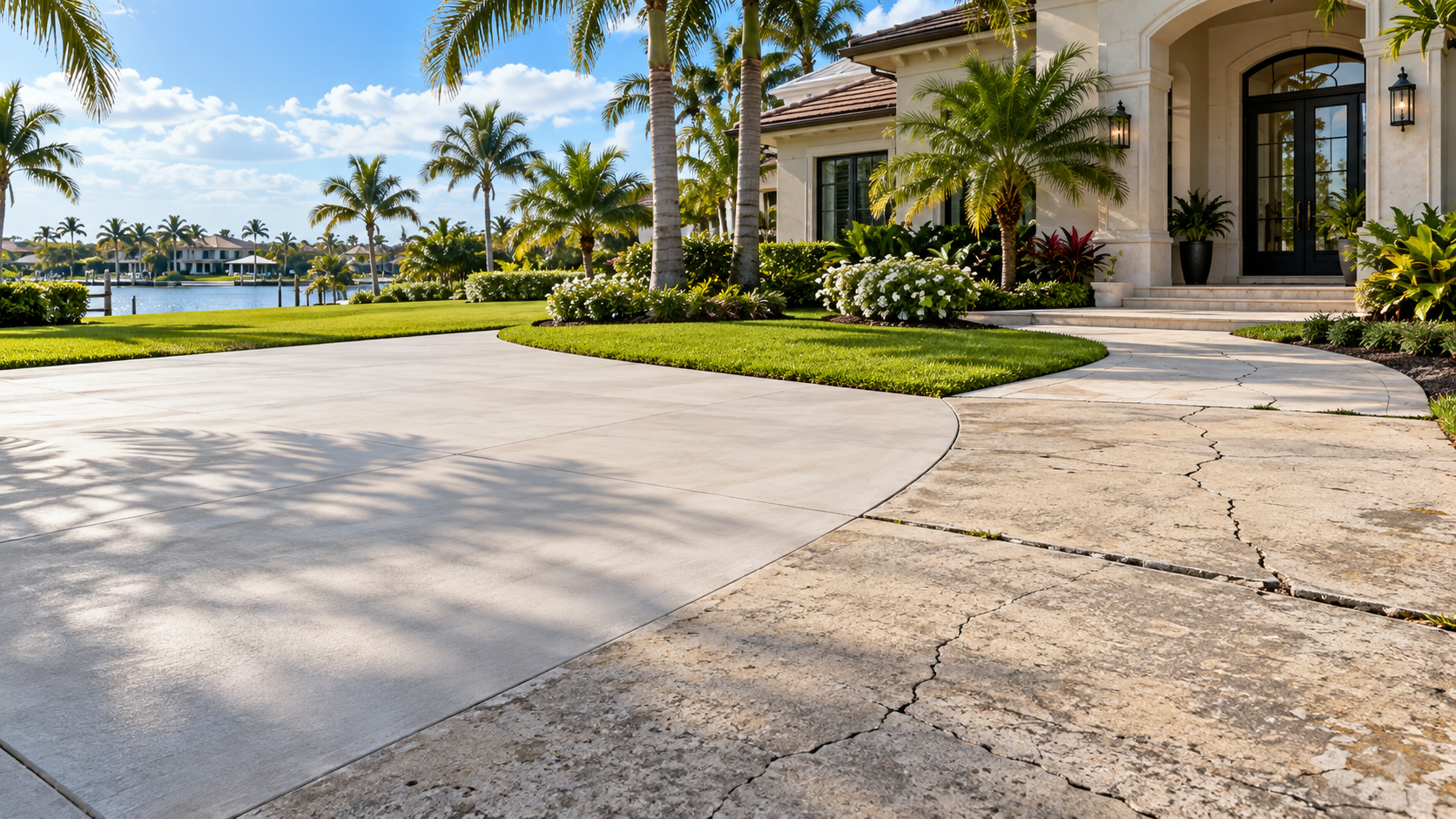
If cracking is accompanied by settlement, recurring movement, widespread deterioration, or failed previous repairs, compare localized repair, resurfacing, partial replacement, and full replacement before deciding how much of the existing surface should be preserved.
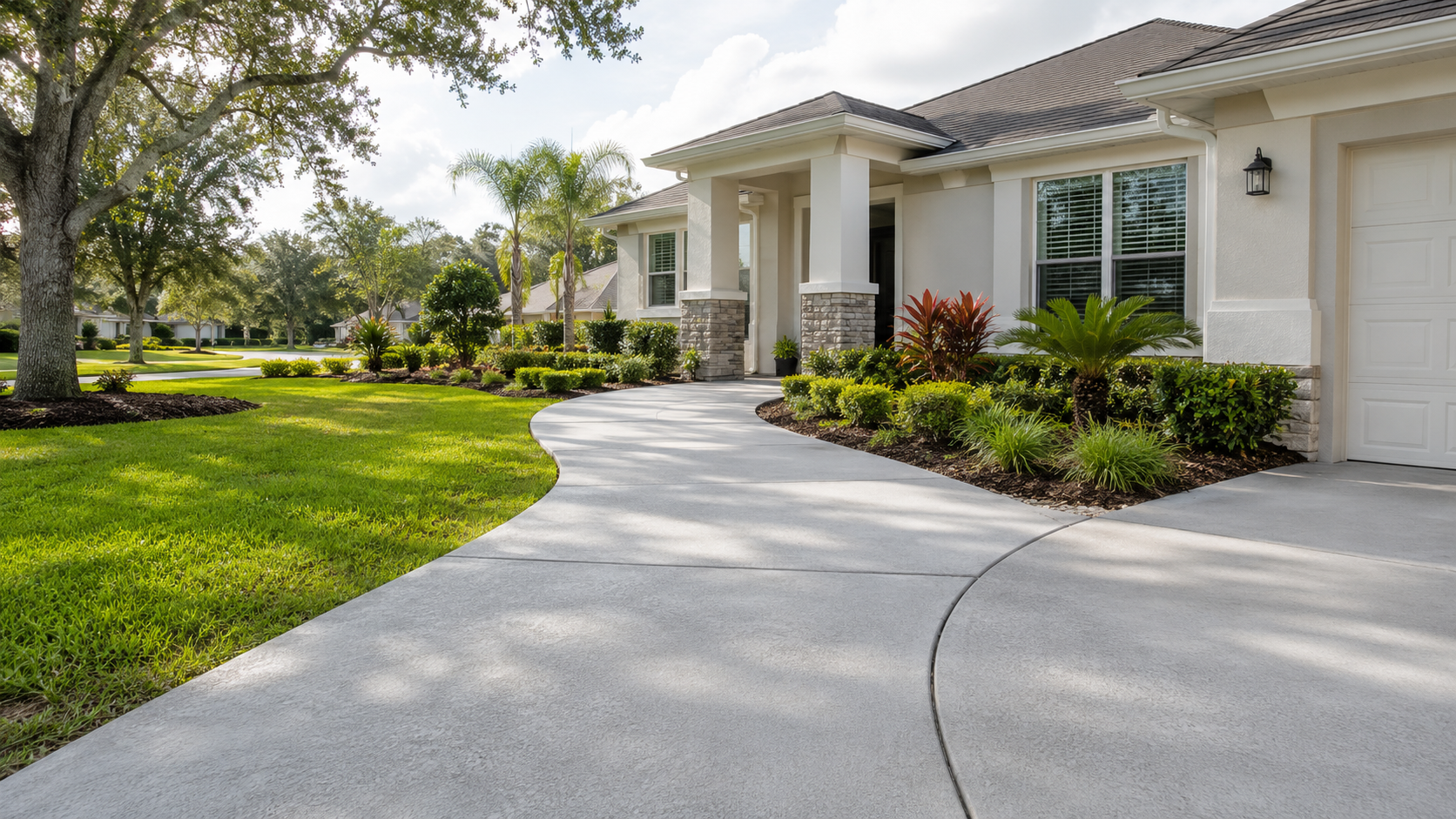
If the surrounding concrete remains generally suitable, review repair and resurfacing options for localized cracks, joints, surface deterioration, worn areas, and other existing-concrete conditions.
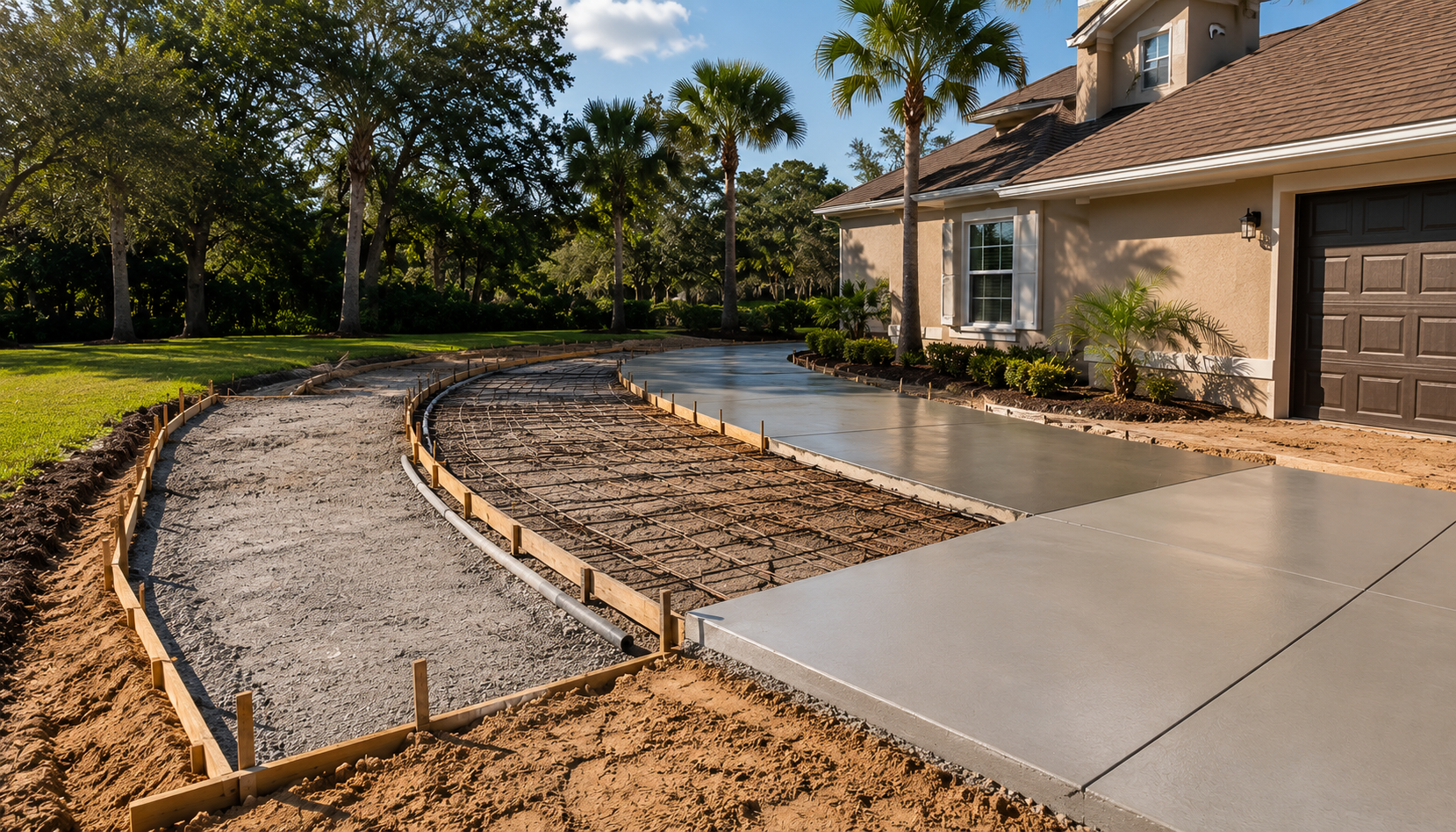
If replacement or future installation is being considered, review how site preparation, grading, concrete placement, joint planning, finishing and curing influence the finished surface from the beginning of the project.
If the concrete remains serviceable, review cleaning, joint care, drainage awareness, surface monitoring, and compatible sealing where appropriate as part of ongoing concrete care.
Request a Concrete Estimate for Cracked or Damaged Concrete in Jacksonville
Understanding why concrete has cracked can help narrow the next question, but the appropriate project scope depends on the actual surface.
Crack location, pattern, settlement, movement, drainage, surrounding support, previous repairs, intended use, access, and the condition of adjoining concrete can all affect whether the next step involves monitoring, repair, resurfacing, partial replacement, or broader replacement.
Cracked-concrete project requests may be considered throughout Jacksonville and nearby Northeast Florida communities. Review Concrete Services in Atlantic Beach, Concrete Services in Fleming Island, Concrete Services in Jacksonville Beach, Concrete Services in Neptune Beach, Concrete Services in Orange Park, Concrete Services in Ponte Vedra Beach, and Concrete Services in St. Augustine.
👉 Explore our full Jacksonville concrete service areas to find your community.
Jacksonville FL Concrete helps route cracked or damaged concrete project requests to local concrete professionals who may contact you about the surface condition, possible project scope, availability, pricing factors, and next steps.
Concrete Crack FAQs for Jacksonville Properties
Is it normal for concrete to crack?
Concrete can develop cracks as it shrinks, changes temperature or moisture content, carries loads, or responds to restraint and changing support conditions. A crack does not automatically mean the entire surface has failed. Location, pattern, movement, surrounding concrete, drainage, and whether the condition changes provide more useful context.
Why does new concrete sometimes crack?
Early cracking can be associated with plastic shrinkage, moisture loss, curing conditions, restrained shrinkage, jointing, settlement, or other installation and environmental factors. New concrete should be considered in relation to the crack pattern and surrounding condition rather than assuming age alone explains what happened.
Can drainage problems contribute to concrete cracking?
They can contribute indirectly. Concentrated runoff, erosion, standing water, washout, or changes in soil and base support can contribute to settlement or movement around exterior concrete. Where cracking and drainage problems occur together, both conditions should be considered.
What does it mean if one side of a crack is higher than the other?
A difference in elevation indicates that the adjoining concrete has moved relative to the other side. Settlement, lifting, loss of support, roots, drainage, erosion, or another property condition may be involved. The amount of movement and surrounding surface condition matter when evaluating the next step.
Why can a repaired crack reopen?
Repairing the visible crack does not necessarily stop the movement that contributed to it. Settlement, restraint, shrinkage, drainage, changing support, or temperature and moisture movement can continue after a cosmetic or localized repair.
Does every concrete crack need repair?
Not necessarily. Some fine cracks may primarily affect appearance, while others deserve closer evaluation because they are changing, associated with movement, accompanied by deterioration, or affecting how the surface is used. The crack and surrounding concrete should be considered together.
Does cracked concrete always need replacement?
No. Localized cracking may remain suitable for repair when the surrounding concrete is stable and serviceable. Resurfacing, partial replacement, or full replacement may become more appropriate where movement, deterioration, support issues, drainage problems, or damage affect a broader area.
Can sealing stop concrete from cracking?
Sealing can provide surface protection where appropriate, but it does not stop active settlement, loss of support, restrained movement, or other physical conditions that are moving the concrete. Existing cracking and movement should be understood before sealing is treated as the primary response.