Concrete Repair vs. Replacement in Jacksonville, FL
Repair, Resurface or Replace? Evaluating Damaged Concrete
Cracked, settled, worn, uneven, or deteriorating concrete does not automatically need to be removed and replaced. Some driveways, patios, walkways, slabs, entries, and other exterior surfaces remain suitable for localized repair or resurfacing, while other projects involve broader movement, drainage, support, or layout problems that make partial or full replacement worth considering.
The decision depends on more than how the surface looks. The extent and location of damage, whether sections are moving or settling, drainage, surrounding grade, base support, previous repair history, the condition of the remaining concrete, intended use, finish expectations, and whether the existing layout still works for the property can all affect the appropriate scope.
Jacksonville FL Concrete helps route concrete repair and replacement requests to local concrete professionals who may review the affected surface, visible deterioration, drainage, movement, surrounding property conditions, intended use, and project goals before discussing available options and next steps.
Request an Estimate
Have photos, measurements, drawings, or project notes? Attach them through the form or include details about the affected surface, visible cracking or settlement, where water collects, previous repairs, approximate size, and any layout or finish changes you are considering.
Thank you for contacting us.
We will get back to you as soon as possible.
Please try again later.
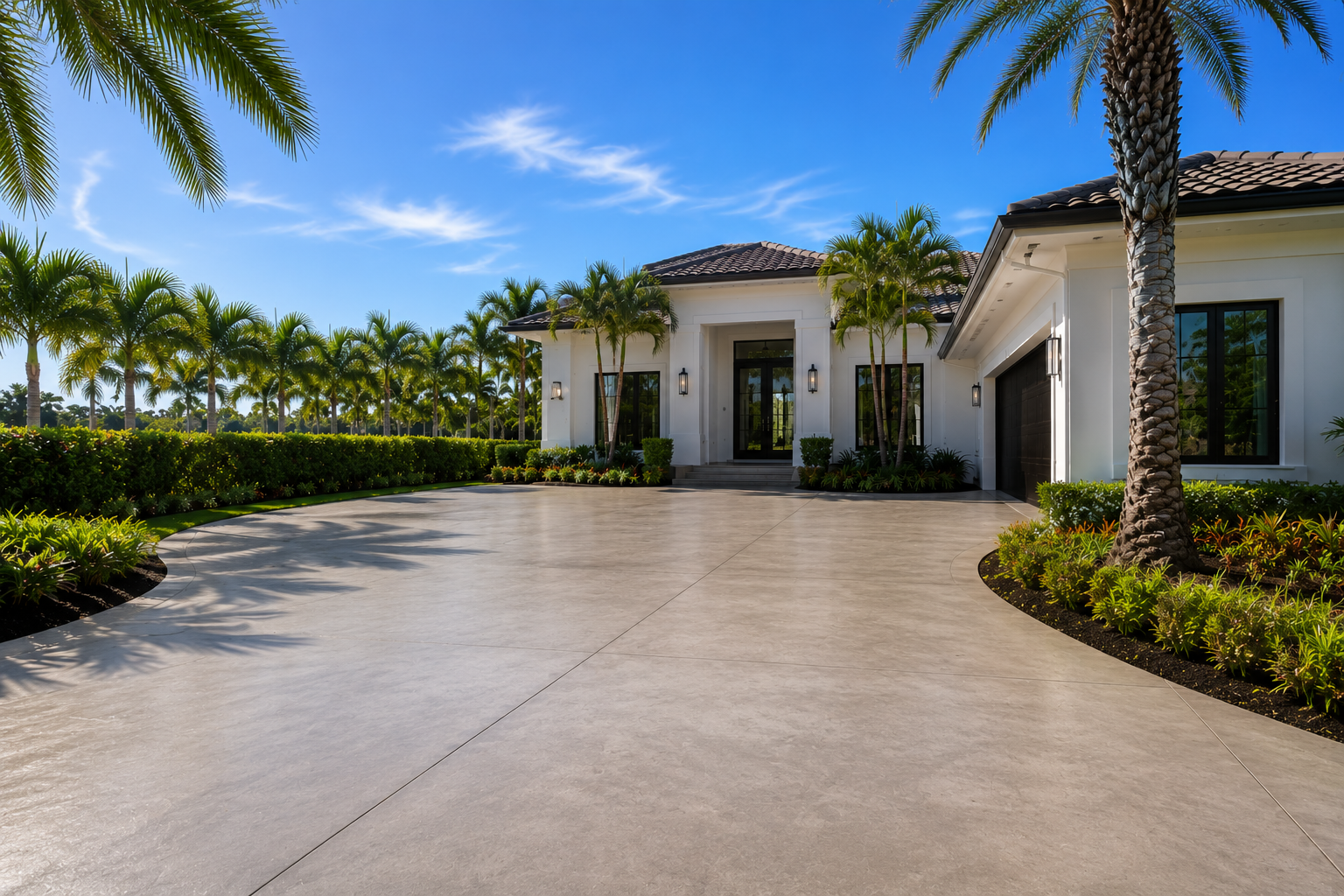
Stamped concrete can suit projects where a decorative poured surface is preferred and the layout, drainage, finish, intended use, and maintenance expectations align with the property.
What Is Concrete Repair & Resurfacing?
Concrete repair focuses on correcting damaged or deteriorated areas while preserving concrete that remains suitable for continued use.
Depending on the condition of the surface, the scope may include localized crack or joint work, damaged edges, surface preparation, patching, selective restoration, limited section replacement, or resurfacing.
Repair or resurfacing may deserve consideration when:
- Cracking or deterioration is localized
- Most surrounding concrete remains stable
- Joint or edge damage affects a limited area
- Surface wear or minor spalling is the main concern
- The existing grade and layout still work for the property
- The underlying concrete remains suitable for resurfacing
- A small number of areas can be addressed without rebuilding the entire surface
Resurfacing belongs within the broader restoration decision. It can renew a suitable existing surface but does not eliminate the need to understand cracking, movement, drainage, support, or other conditions beneath or around the visible finish.
The key question is whether enough of the existing concrete remains suitable to justify preserving it and whether the contributing condition can be addressed within a repair-oriented scope.
For more detail about restoration options, review Concrete Repair & Resurfacing.
What Is Concrete Replacement?
Concrete replacement involves removing and rebuilding part or all of an existing surface when preserving the current concrete no longer provides the most practical project scope.
Replacement does not necessarily mean removing everything.
A project may involve one failed panel or section, several affected areas, or complete removal and reconstruction of a driveway, patio, walkway, slab, entry area, or other concrete surface.
Replacement may deserve stronger consideration when:
- Cracking or deterioration is widespread
- Several sections are broken, settled, or moving
- Previous repairs continue to fail
- The surface has extensive deterioration that is not suitable for resurfacing
- Drainage or grade needs broader correction
- Base or support conditions affect a larger area
- Too many isolated repairs would be required
- The existing layout no longer meets the property's needs
- A driveway needs widening or additional parking
- A patio needs enlargement or reconfiguration
- A walkway route or elevation needs to change
- The intended use or expected load has changed
Replacement can also provide access to reconsider grade, drainage, preparation, elevations, joint layout, concrete thickness, reinforcement where appropriate, surface finish, and transitions with surrounding hardscape.
Side-by-Side Comparison
| Feature | Concrete Repair / Resurfacing | Partial / Full Replacement |
|---|---|---|
| Existing Concrete | Preserves concrete that remains suitable for continued use | Removes failed or unsuitable sections and installs new concrete |
| Typical Scope | Cracks, joints, chips, surface wear, localized deterioration, resurfacing or limited restoration | One or more failed sections, or complete removal and reconstruction |
| Best Fit | Localized issues where most surrounding concrete remains stable | Widespread deterioration, movement, recurring problems or major layout changes |
| Demolition | Usually limited to affected areas | Can involve significant removal, haul-off and site preparation |
| Base / Support Access | Typically limited to localized areas | Allows broader correction of grading, support or preparation |
| Drainage Changes | May address localized drainage where practical | Offers more flexibility to change grade, slope, elevations and runoff |
| Appearance Matching | Older color, texture or decorative finishes can be difficult to match exactly | Replaced area can receive a more consistent new finish |
| Layout Changes | Usually retains the existing footprint | Allows widening, enlargement, rerouting or reconfiguration |
| Major Cost Drivers | Damage extent, preparation, repair method, resurfacing, finish matching, access and drainage | Demolition, disposal, grading, base work, drainage, size, thickness, access and finish |
| Long-Term Consideration | Depends heavily on the remaining concrete and whether the contributing cause is addressed | Depends on new preparation, drainage, installation, intended use and future maintenance |
This comparison is a general framework rather than a diagnosis. The appropriate scope depends on the actual concrete, extent and cause of deterioration, site conditions, intended use, and project goals.
Benefits & Considerations of Repair and Replacement
Benefits of Concrete Repair & Resurfacing
Repair or resurfacing can make sense when the existing concrete still has practical value. Potential benefits include:
- Preserving concrete that remains serviceable
- Limiting demolition where deterioration is localized
- Addressing isolated cracks, joints, chips or damaged sections
- Renewing a worn surface when the underlying concrete remains suitable
- Retaining an existing layout that still works for the property
- Limiting disruption to surrounding landscaping and hardscape
- Reducing the project scope where broader replacement is unnecessary
Repair & Resurfacing Considerations
Repair is not automatically the appropriate choice simply because the affected area appears small.
Important considerations include:
- The cause of cracking, settlement or deterioration
- Whether movement is continuing
- Whether drainage contributes to the problem
- The condition of the surrounding concrete
- Whether resurfacing has a suitable underlying surface
- Previous repair history
- Difficulty matching older color, texture or decorative finishes
- Whether repeated localized work is creating a patchwork surface
Repairing the visible symptom without addressing a contributing drainage, movement, or support problem may not resolve the broader condition.
Benefits of Concrete Replacement
Replacement provides a different type of flexibility because failed concrete is removed rather than preserved.
Potential benefits include:
- Removing concrete that is no longer suitable for restoration
- Addressing multiple deteriorated or moving areas together
- Providing broader access to grade and base preparation
- Allowing larger drainage or elevation corrections
- Creating a more consistent new surface
- Changing size, route, width or layout
- Matching the project to a different use, traffic pattern or property improvement
Replacement Considerations
Replacement generally involves a larger project scope. Important considerations include:
- Demolition and haul-off
- Excavation and grading
- Base correction or preparation
- Drainage changes
- Access for equipment and materials
- Existing landscaping and utilities
- Connections with remaining hardscape
- New joints, finishing and curing
- Possible HOA, permit or right-of-way requirements where applicable
Neither approach is automatically preferable. The decision should focus on whether preserving the existing surface adequately addresses the condition or whether rebuilding part or all of it creates a more coherent project.
How Repair, Partial Replacement & Full Replacement Fit Different Conditions
The most useful decision is often not simply repair everything or replace everything.
Repair or Resurfacing May Be a Better Fit When:
- Damage is limited to one or several localized areas
- Most surrounding concrete remains stable
- Surface wear is more significant than structural movement
- Cracking is not associated with broader settlement
- The existing footprint, grade and use still work
- The concrete remains suitable for resurfacing
- A contributing drainage issue can be corrected without rebuilding the entire area
- Preserving usable concrete provides a practical scope
Partial Replacement May Be a Better Fit When:
- One or several sections have failed but adjoining concrete remains serviceable
- Settlement or deterioration is concentrated in a defined area
- A section needs to be removed to correct localized support or drainage
- A driveway panel, walkway section, patio area or slab segment can be rebuilt without replacing everything
- The remaining surface still meets the property's layout and use requirements
Partial replacement should still account for joints, elevation, drainage, finish matching and the transition between old and new concrete.
Full Replacement May Be a Better Fit When:
- Damage is widespread
- Several sections are cracked, settled or moving
- Earlier repairs repeatedly fail
- Too many separate repairs would be required
- Drainage or grading requires broader correction
- Base/support problems extend through a significant portion of the project
- The surface is no longer appropriate for resurfacing
- The driveway, patio or walkway needs a major size or layout change
- Existing elevations no longer fit surrounding hardscape or property use
- The intended use or load has changed substantially
Age Alone Should Not Decide
Older concrete that remains stable can still be suitable for repair or resurfacing.
Conversely, newer concrete can develop conditions that justify broader work if movement, support, drainage or widespread deterioration is significant.
The condition and cause matter more than age by itself.
Jacksonville Conditions That Can Affect Repair vs. Replacement Decisions
Repair and replacement decisions in Jacksonville should be considered alongside the conditions surrounding the actual surface. Drainage, settlement, landscaping, existing grade, coastal exposure and hardscape connections can affect whether preserving or rebuilding part of the concrete makes more sense.
Heavy Rainfall, Standing Water & Drainage
Frequent rainfall can reveal low areas, poor runoff direction, ponding, erosion and drainage transitions around driveways, patios, slabs, walkways, garage approaches and landscape beds.
If water movement contributes to deterioration or settlement, repairing only the visible crack or damaged area may leave the contributing condition unchanged. Where grade or runoff needs broader adjustment, replacement can provide more flexibility to modify elevations and surface drainage.
Settlement, Existing Grade & Base Support
Uneven sections can reflect conditions beneath or around the concrete rather than a surface-only problem.
Where movement appears isolated, selective repair or partial replacement may remain practical. Where settlement affects several areas or the existing grade itself is contributing to the problem, broader removal and preparation may deserve consideration.
Landscaping, Tree Roots & Irrigation
Established Jacksonville properties can have mature landscaping, irrigation, roots, fences, utilities and landscape beds close to existing concrete.
These conditions can affect cracking, movement, moisture, demolition access and the practicality of rebuilding individual sections. Repair or replacement planning should consider the surrounding property rather than treating the concrete as an isolated surface.
Coastal Exposure & Surface Condition
Properties in Atlantic Beach, Jacksonville Beach, Neptune Beach, Ponte Vedra Beach, St. Augustine and other exposed areas may experience different moisture, salt-air and surface-care conditions from more protected inland properties.
Surface staining, fading, sealer wear or cosmetic deterioration alone do not automatically justify replacement. The remaining concrete, movement, drainage and support conditions still matter more to the repair-versus-replacement decision.
Hardscape Transitions & Layout Changes
Driveways, patios, walkways, slabs, entries, pool-adjacent surfaces, curbs and landscape areas frequently connect.
Repair or replacement should consider how elevations, joints, drainage paths, vehicle access and pedestrian movement work across those connections. Replacement can become more attractive when the existing configuration itself needs to change.
HOA, Right-of-Way & Jurisdictional Considerations
Requirements vary with the property and project.
A localized repair entirely within private property may involve a different review process from replacement that changes a driveway connection, sidewalk, drainage condition, footprint, grade or work within a public right-of-way.
The actual jurisdiction and project scope should be confirmed before assuming which permits, approvals or community requirements apply.
Cost Differences Between Concrete Repair and Replacement
Repair and replacement involve different types of work, so comparing only the initial dollar amount can be misleading.
Concrete Repair & Resurfacing Cost Factors
Repair pricing can be influenced by:
- Size and number of affected areas
- Crack, joint, edge or surface condition
- Preparation requirements
- Localized demolition
- Repair method and materials
- Resurfacing scope
- Decorative finish matching
- Drainage corrections
- Access to the affected area
- Adjoining concrete and transitions
A localized repair may involve less upfront work than full replacement, but a smaller initial scope does not automatically make it the more economical direction if the underlying condition remains or repeated repairs become necessary.
Concrete Replacement Cost Factors
Replacement can involve:
- Demolition and concrete removal
- Haul-off and disposal
- Excavation or grading
- Base correction and compaction
- Drainage changes
- Forming
- Reinforcement where appropriate
- New concrete placement
- Finishing
- Joint planning
- Curing
- Transitions with surrounding surfaces
- Access and property restoration
Partial replacement limits these factors to selected sections, while full replacement applies them across a larger area.
For current Jacksonville planning ranges and broader pricing factors, review the Cost of Concrete Services in Jacksonville.
Comparing Long-Term Cost, Maintenance & Performance
Initial project price is only one part of the decision.
Useful factors to compare include:
- Upfront repair or replacement cost
- Amount of concrete affected
- Cause of cracking or movement
- Remaining condition of surrounding concrete
- Drainage and base support
- Previous repair history
- Likelihood of additional localized work
- Demolition and preparation requirements
- Appearance and finish matching
- Future maintenance
- Intended use and traffic
- Planned layout changes
- Connections with other hardscape
- Whether the property will be modified again in the near future
A lower repair price does not automatically make repair the stronger long-term direction if deterioration repeatedly returns or the underlying condition remains unresolved.
At the same time, the greater initial scope of replacement does not make replacement necessary when most of the existing concrete remains stable, functional and suitable for restoration.
The better comparison is whether the proposed scope addresses the actual condition while preserving concrete that still has practical value where appropriate.
Helpful Resources for Repair & Replacement Decisions
Use these resources to move from the comparison itself into the specific question that matters next.
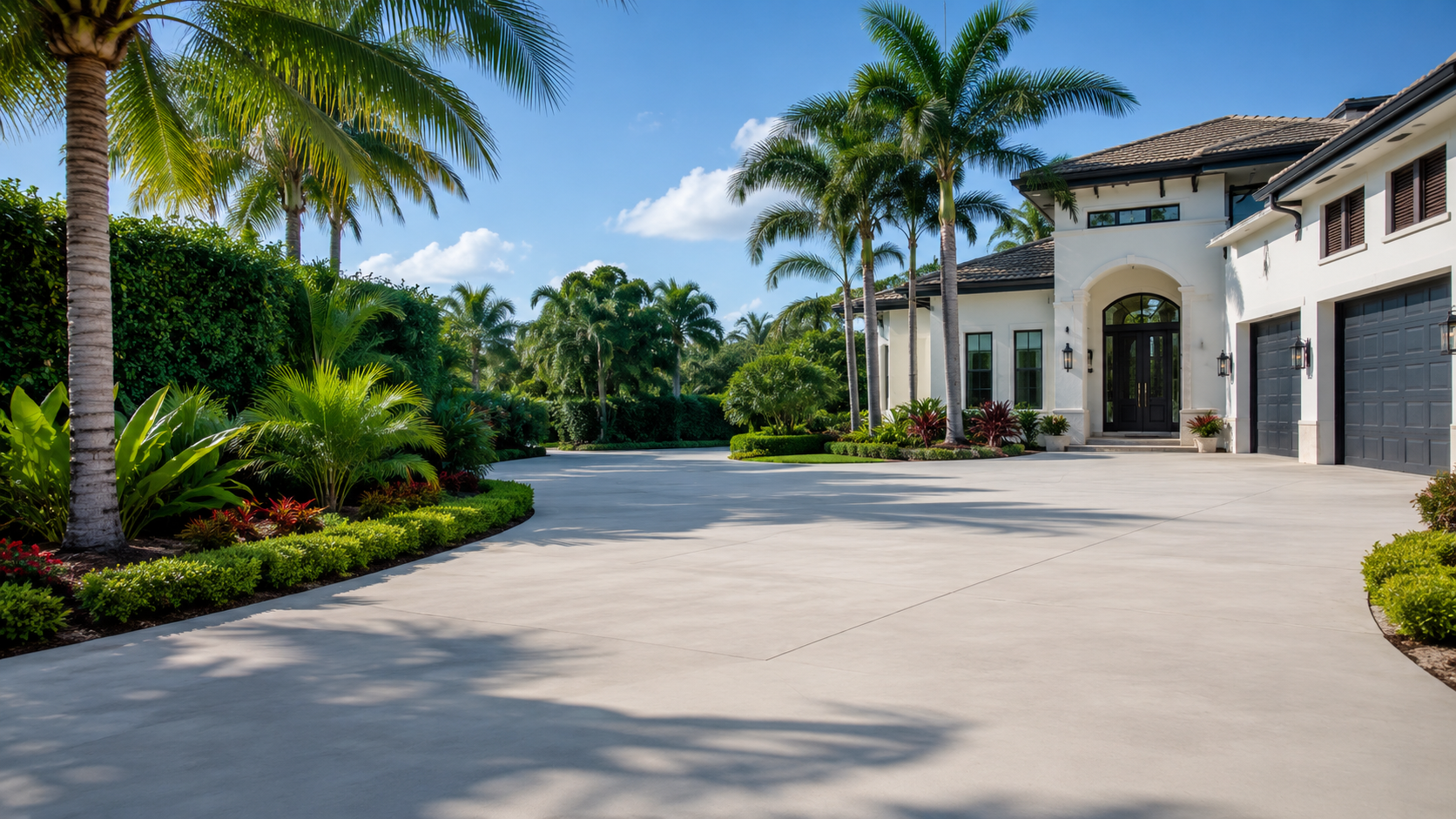
If the existing surface appears suitable for preservation, review repair, resurfacing and restoration options for cracks, joints, localized deterioration, worn surfaces and other existing-concrete conditions.
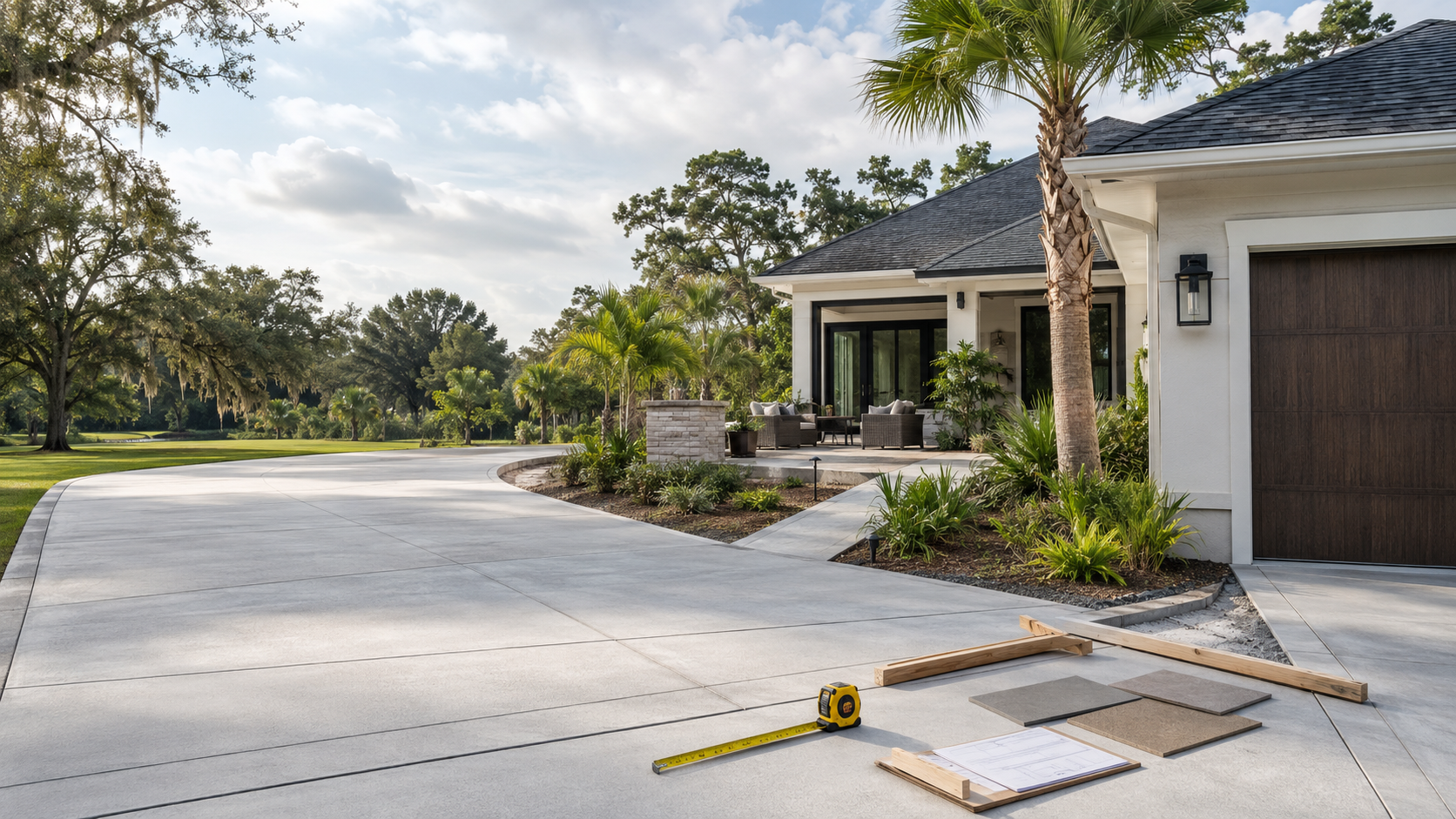
If budget is the next question, review Jacksonville planning ranges and how demolition, access, drainage, preparation, surface condition, finish selection and replacement scope can affect project pricing.
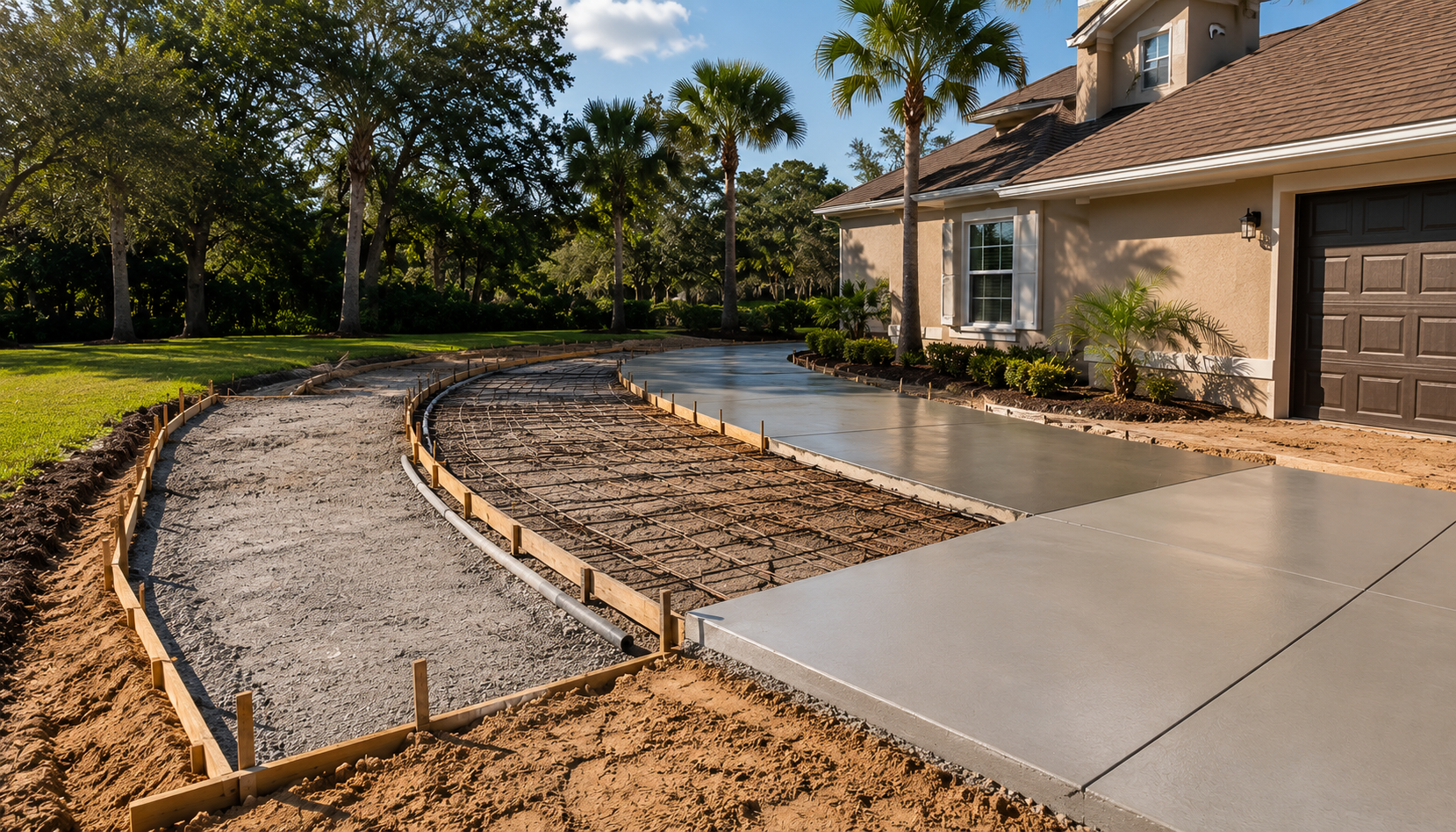
If replacement is becoming the likely direction, review how a new concrete project moves through site evaluation, demolition or preparation, forming, placement, finishing, jointing, curing and final use.
If the existing surface remains suitable for repair—or after repaired or replacement concrete is completed—review cleaning, joint care, surface monitoring, drainage awareness and compatible sealing where appropriate.
Request a Concrete Estimate After Comparing Repair & Replacement
If you are deciding whether a driveway, patio, walkway, slab, entry area, or other concrete surface should be repaired, resurfaced, partially replaced or fully replaced, project-specific information can help narrow the appropriate scope.
Include the property location, surface type, approximate affected area, visible cracking or settlement, drainage concerns, previous repair history, intended use, existing layout, and any changes you want to make to the size, grade or finish.
Concrete repair and replacement requests may be considered throughout Jacksonville and nearby Northeast Florida communities. Review Concrete Services in Atlantic Beach, Concrete Services in Fleming Island, Concrete Services in Jacksonville Beach, Concrete Services in Neptune Beach, Concrete Services in Orange Park, Concrete Services in Ponte Vedra Beach, and Concrete Services in St. Augustine.
👉 Explore our full Jacksonville concrete service areas to find your community.
Jacksonville FL Concrete helps route project requests to local concrete professionals who may contact you about surface condition, repair or replacement scope, availability, pricing factors and next steps.
Concrete Repair vs. Replacement FAQs for Jacksonville Properties
Can cracked concrete be repaired instead of replaced?
Potentially. Localized cracks may be suitable for repair when the surrounding concrete remains stable and the condition is not associated with broader settlement, drainage or support problems. Widespread cracking, recurring movement or deterioration across several sections may justify evaluating partial or full replacement instead.
When is concrete resurfacing an option?
Resurfacing may be considered when the underlying concrete remains suitable but the visible surface is worn, stained, weathered or otherwise needs broader renewal. It is less appropriate when significant movement, settlement, widespread deterioration or unsuitable underlying concrete is the primary concern.
Does settled concrete always need to be replaced?
No. The decision depends on the extent and likely cause of the settlement, condition of the affected concrete, drainage, support beneath the surface, adjoining sections and whether movement appears localized or widespread.
Can only one section of a driveway, patio or walkway be replaced?
Potentially. Partial replacement may be practical when one or several sections have failed while surrounding concrete remains suitable. Joint locations, elevation, drainage, finish matching and transitions between existing and new concrete should be considered.
Is concrete repair always cheaper than replacement?
Repair can involve a smaller initial scope when deterioration is localized, but that does not automatically make it less expensive over time. Repeated repairs, unresolved movement or drainage problems, extensive preparation or difficult finish matching can change the comparison.
Can stamped or decorative concrete be repaired?
Potentially, provided the underlying concrete remains suitable for repair or resurfacing. Matching existing color, pattern, texture, scoring, borders or other decorative details can be difficult, so appearance should be considered alongside the condition of the concrete itself.
Do drainage problems affect whether concrete should be repaired or replaced?
They can. If runoff, low areas, erosion or grade contribute to settlement or deterioration, the decision should consider whether those conditions can be corrected within a repair scope. Replacement may provide greater flexibility when broader elevation, slope or drainage changes are needed.
Does the age of concrete determine whether it should be replaced?
No. Age alone is not enough. Older concrete that remains stable may still be suitable for repair or resurfacing, while newer concrete with significant movement, widespread deterioration or support problems may require broader corrective work.